Authentic Beijing Scallion Pancakes
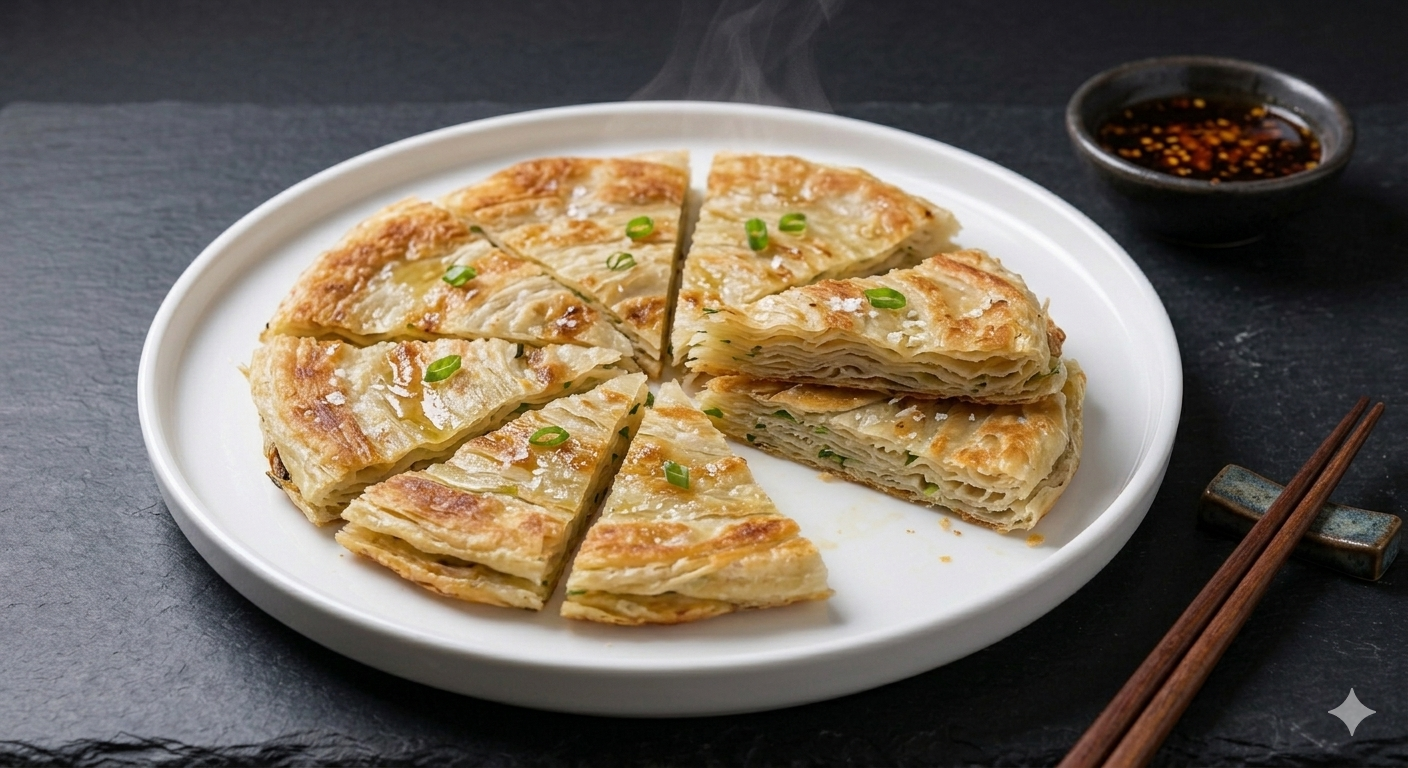
老北京葱油饼 — Crispy, flaky, lard-laminated scallion pancakes
Yield: 4 pieces
Portion: 1 pancake
Prep: 30m
Cook: 30m
Rest: 35m
Total: 1h 35m
Ingredients
Dough
- 200 g all-purpose flour
- 120 ml boiling water
- 0.5 tsp salt
Filling
- 4 scallions (green parts only), very finely sliced, almost hair-thin
- 2 tbsp lard, traditional — substitute: neutral oil + ½ tsp sesame oil
- 0.5 tsp salt
For frying
- to taste neutral oil or lard, 1–2 tbsp per pancake
Method
Hot-water dough (关键步骤)
- 1
Place 300 g flour and ½ tsp 0.5 tsp salt in a large bowl. Add 180 ml 120 ml boiling water gradually, stirring with chopsticks until a shaggy dough forms.
2mUse boiling water — this partially cooks the starch, making the dough pliable and easy to roll ultra-thin.
- 2
When cool enough to handle, knead lightly until smooth — 3 to 4 minutes. Do not overwork.
4m - 3
Cover with a damp cloth or cling film and rest for 30 minutes. This relaxes the gluten and allows ultra-thin rolling.
30m
Scallion prep
- 4
Slice the green parts of the scallions very fine — almost hair-thin. Mix with 1 tsp salt just before use.
5mTip: Salting the scallions draws out moisture and intensifies flavour. Do this right before assembling, not earlier.
Lamination (authentic layering)
- 5
Divide the rested dough into 6 equal balls. Roll one ball into a very thin rectangle — almost translucent.
3m - 6
Spread ½ tbsp 2 tbsp lard evenly over the dough surface. Sprinkle scallions evenly across.
1m - 7
Roll tightly into a long cigar shape, stretching slightly as you go. Coil into a tight spiral and tuck the end underneath. Rest each coil 5 minutes before flattening.
7mThe tight spiral creates the characteristic flaky layers. Do not rush — loose rolling produces flat, dense pancakes.
- 8
Repeat with the remaining dough balls. Work in batches — roll and fill while previous coils rest.
15m
Final rolling
- 9
Gently flatten each rested spiral with your palm. Roll into a 15 cm (6-inch) pancake. Do not press hard — preserve the layers.
5mLight pressure is essential. Heavy rolling destroys the laminated layers you just created.
Pan-fry
- 10
Heat 1–2 tbsp fat in a flat pan over medium heat. Fry each pancake 2–3 minutes per side, rotating occasionally. Press gently with a spatula for even browning.
25mmediumPan-fry only — never deep-fry or bake. The exterior should be golden and crisp, the interior flaky and layered.
Serve
- 11
Cut into wedges. Serve plain or with light soy sauce, Chinkiang black vinegar, or chili oil on the side. No dipping sauce is required traditionally — the pancake stands on its own.
2m
Allergens
Storage & Shelf Life
Refrigerated
Temperature: 0-4°C
Shelf life: 2 days
Freeze: Yes
Uncooked pancakes freeze well — stack between parchment paper and freeze flat. Fry directly from frozen, adding 1 minute per side. Cooked pancakes reheat best in a dry pan over medium heat.
Plating
Cut each pancake into wedges and arrange on a flat plate or wooden board. The golden, flaky layers should be visible at the cut edges.
Garnish: Serve with small dishes of light soy sauce, Chinkiang black vinegar, or chili oil
Serve in: Flat plate or wooden board
Temperature: Hot — serve immediately after frying
The Story Behind This Dish
“This is the scallion pancake you find at street stalls and old neighbourhood shops across Beijing — nothing like the thick, doughy versions served in Western Chinese restaurants. The hot-water dough makes it pliable enough to roll translucent-thin. The lard creates true lamination — each spiral producing dozens of paper-thin, crispy layers. The technique is closer to puff pastry than flatbread. In Beijing, these are eaten plain, maybe with a splash of black vinegar, and that's all they need.”
Wine pairing: Chinese jasmine tea, cold Tsingtao, or a dry Riesling
Disclaimer: The information provided in this recipe, including preparation methods, storage guidelines, and shelf-life recommendations, is for general guidance only. We accept no responsibility for any foodborne illness or adverse effects resulting from the preparation, handling, storage, or consumption of food made using this recipe. Always follow safe food handling practices and consult official food safety guidelines.
Comments are not configured yet.