Bochechas de Porco
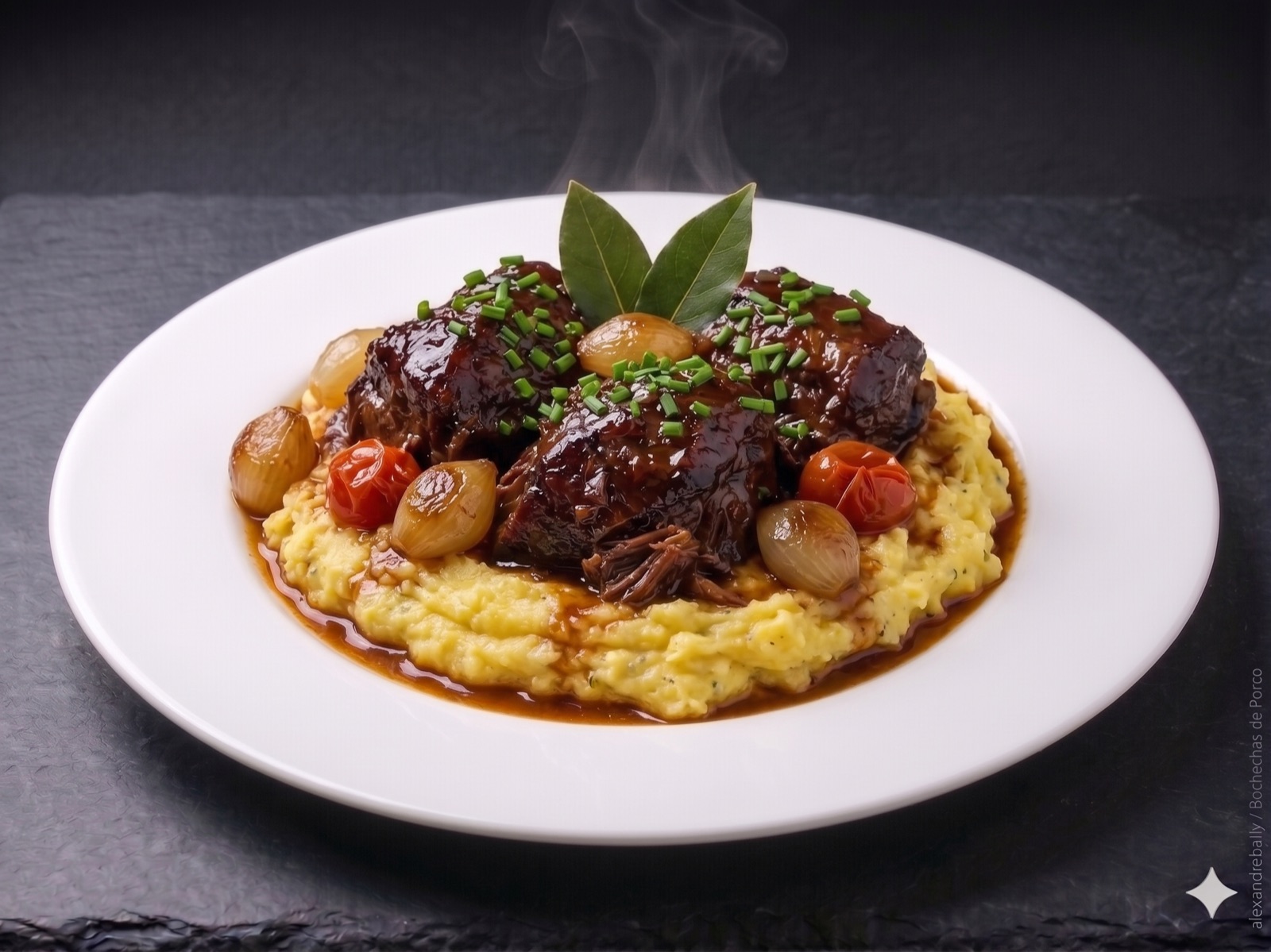
Braised pork cheeks — seared hard, braised low and slow in red wine and port until the collagen melts and the sauce naps itself glossy
Yield: 4 portions
Portion: Main
Prep: 40m
Cook: 3h
0Total: 3h 40m
Ingredients
Pork and sear
- 1 kg pork cheeks, trimmed, patted dry
- 30 g flour, to dust lightly
- 40 ml olive oil, to sear
- 0 to taste salt and pepper
Braise
- 2 onions, chopped
- 1 carrot, chopped
- 4 garlic
- 400 ml red wine
- 200 ml port
- 300 ml stock
- 2 bay leaves
- 0 a few sprigs thyme
Method
Sear and build the base
- 1
Pat 1 kg cheeks dry, season with salt and pepper, and dust lightly with 30 g flour. SEAR them hard in 40 ml olive oil in a heavy pot until deeply browned — the fond you build here is most of the sauce's flavour, so don't rush this to pale. Set aside.
12mhighSear in batches; a crowded pot steams and you lose the fond.
Low-and-Slow Braising (Collagen → Gelatine) - 2
Soften 2 chopped onions, 1 chopped carrot and 4 garlic cloves in the same pot for 8 min, scraping up the browned bits. Deglaze with 400 ml red wine and 200 ml port, reduce by a third to drive off the raw alcohol, then return the cheeks with 300 ml stock, 2 bay leaves and thyme — the liquid should come most of the way up the meat, not submerge it.
15mDon't submerge — most of the way up the meat, or you're boiling and the sauce never concentrates.
Refogado — the Portuguese Aromatic Base
Braise and glaze
- 3
Cover and braise gently — 150–160 °C in the oven gives more even heat than the hob — for 2½–3 h, turning and basting. Take it PAST the point where the meat first seems cooked: pork cheek goes tough first, then tender, and only a long hold converts the collagen. It's ready when a fork twists in with zero resistance and the cheek wobbles.
2h 45m150–160 °Cheavy lidded pot or ovenPull at apparent doneness (~75 °C) and it's tough — the long hold is what converts the collagen to gelatine.
Low-and-Slow Braising (Collagen → Gelatine) - 4
Lift the meat out, reduce the sauce until it naps a spoon (the gelatine does the thickening — no cornflour needed), check the seasoning, and return the cheeks to glaze. Serve with mash or batatas a murro.
10m
Allergens
Storage & Shelf Life
Refrigerated
Temperature: 0-4°C
Shelf life: 3 days
Freeze: Yes
Better the next day: braise fully, cool the cheeks in their sauce and refrigerate (the fat sets for easy removal). Reheat gently in the sauce, then reduce to glaze.
Plating
Sit the lacquered cheeks on mash or smashed potatoes with the glossy reduced sauce spooned over and pooled around.
Garnish: A little thyme; the glaze itself
Serve in: Wide shallow plate
Temperature: Hot
The Story Behind This Dish
“Pork cheek is almost pure collagen, which is exactly why it's so good braised — held wet and low long enough, that collagen turns to gelatine and the meat goes from tough to melting while the sauce thickens itself glossy. The crucial thing is to take it past the point where it first seems cooked.”
Wine pairing: A robust Douro or Alentejo red
Disclaimer: The information provided in this recipe, including preparation methods, storage guidelines, and shelf-life recommendations, is for general guidance only. We accept no responsibility for any foodborne illness or adverse effects resulting from the preparation, handling, storage, or consumption of food made using this recipe. Always follow safe food handling practices and consult official food safety guidelines.
Comments are not configured yet.