Burst Cherry Tomato & Basil Pasta
Spaghetti with burst cherry tomatoes, basil and a glossy mantecatura finish
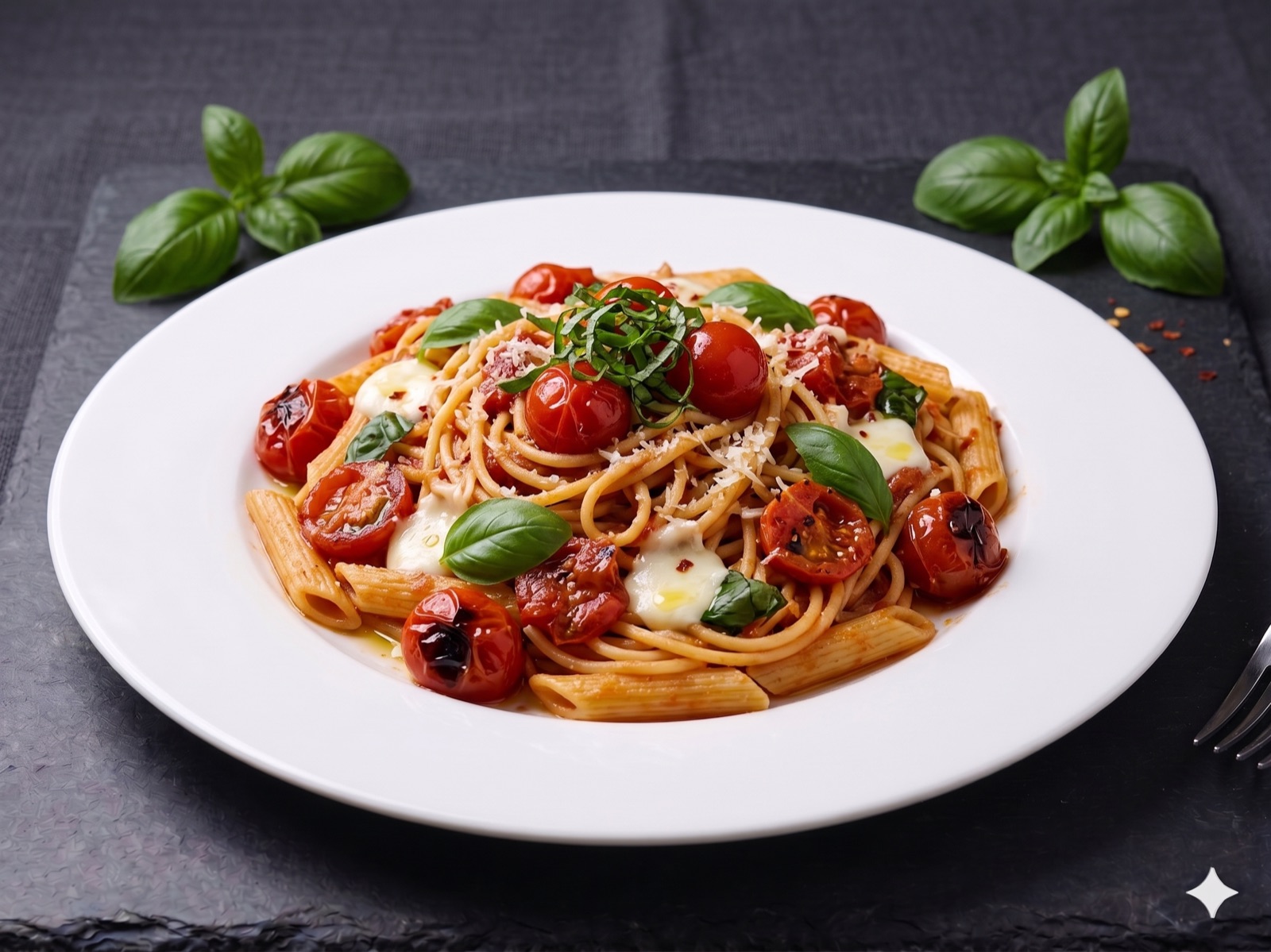
Yield: 2 portions
Portion: ~350g
Prep: 10m
Cook: 15m
0Total: 25m
Ingredients
Main ingredients
- 200 g spaghetti, bronze-cut if possible
- 400 g cherry tomatoes, halved
- 3 garlic cloves, thinly sliced
- 3 tbsp extra virgin olive oil
- 1 tsp tomato paste
- 30 g Parmigiano-Reggiano, finely grated, ideally aged 24+ months
- 15 g fresh basil, torn by hand
- 1 lemon, zest of half
- 10 g butter
- to taste salt
Optional
- 2 anchovy fillets, finely chopped — for savoury depth(optional)
- a pinch chilli flakes, ~¼ tsp(optional)
- 40 g day-old bread, sourdough or ciabatta, for lemony pangrattato(optional)
Method
Mise en place
- 1
Put a wide pot of salted water on to boil. Halve the cherry tomatoes and toss with a generous pinch of salt; leave them to sit while you prep everything else. Thinly slice the garlic, grate the Parmesan, pick the basil and zest half the lemon.
5mSalting the halved tomatoes ahead is not optional — osmosis pulls moisture to the surface so they collapse faster and concentrates their free glutamate for deeper flavour.
Tip: Use only enough water to cover the pasta well — less water makes a more concentrated, starchier cooking liquid for the final emulsion.
Infuse the oil
- 2
Set a wide, heavy pan (not non-stick — steel or aluminium gives the friction that helps the sauce emulsify later) over medium-low heat with the olive oil. Add the sliced garlic, and if using, the chopped anchovy and chilli flakes. Keep it at a lazy sizzle for 1–2 minutes until the garlic is soft and fragrant and the anchovy has melted into the oil.
2mmedium-lowThe moment the garlic takes on colour it turns acrid. You are infusing the oil, not frying — pull the heat back if it threatens to brown.
Garlic-Oil Infusion (Two-Stage Method)Tip: The anchovy is the highest-leverage addition here: it brings glutamate-synergising ribonucleotides that multiply the tomatoes' savouriness and reads as depth, not fish.
- 3
Push the aromatics to one side, nudge the heat up to medium, and add the tomato paste to a clear patch of the pan. Let it cook in the oil for 30–60 seconds until it darkens a shade and smells sweet rather than raw.
1mmediumTip: This concentrated hit of cooked-tomato umami papers over any thinness in out-of-season fruit.
Burst the tomatoes
- 4
Add the salted tomatoes cut-side down, holding back a small handful (about a sixth) for the finish. Let them sizzle undisturbed for a minute, then cook, stirring occasionally and pressing the softening ones against the pan, for 8–10 minutes until they slump, weep and turn into a glossy, jammy sauce.
10mmediumKeep the tomatoes close to a single layer so they burst and sweat rather than steam. Don't cook to a uniform paste — leave some intact fruit for texture.
Bursting & Confit-ing Cherry TomatoesTip: If the fruit is tart rather than sweet, a tiny pinch of sugar balances it; if it's very ripe, skip it.
Cook the pasta
- 5
While the tomatoes cook, drop the spaghetti into the boiling water and cook to 2 minutes short of al dente — it finishes in the pan. Before draining, lift out a mugful (about 250 ml) of the starchy pasta water.
8mCooking in less water gives a more concentrated, starchier liquid — this is what makes the final sauce bind instead of break. Do not throw the pasta water away.
Mantecatura — the glossy finish
- 6
Tip the drained pasta straight into the tomato pan with a splash (about 60 ml) of the reserved water. Keep the pan over medium heat and toss continuously for 1–2 minutes, scooching the pan back and forth so the pasta and sauce stay in constant motion. Add more pasta water a splash at a time if it tightens up. For a rounder, glossier finish, drop in the butter and toss until it disappears.
2mmediumThe starch on the pasta, the starch in the water and the olive oil emulsify into a single creamy sauce. Aim for a sauce that flows and clings, not one that sits in a puddle.
Mantecatura (Pasta Sauce Emulsification)Tip: Constant motion is what drives the emulsion — keep the pasta moving the whole time.
- 7
Take the pan off the heat. Add the reserved raw tomatoes, the grated Parmesan, most of the torn basil and the lemon zest. Toss once more off the heat. Taste and correct the salt.
1mAdd the cheese off direct heat so it doesn't seize into strings. The residual warmth softens the raw tomatoes just enough while keeping their bright acidity intact.
Tip: Tomatoes and Parmesan are both salty, so you may need very little extra salt.
Plate
- 8
Plate into warmed bowls. Scatter over the rest of the basil, the optional lemony pangrattato, and a final thread of good olive oil.
1mTip: For pangrattato: toast 40 g torn day-old bread in 1 tbsp olive oil until deep gold and crisp (4–5 min), then toss off the heat with lemon zest and a pinch of salt.
Allergens
Dietary
Storage & Shelf Life
Refrigerated
Temperature: 0-4°C
Shelf life: 2 days
Freeze: Not recommended
Best eaten fresh. The tomato base alone keeps refrigerated for 2 days and actually improves overnight — reheat it gently, then cook fresh pasta and mantecare to order.
Plating
Serve in warmed shallow bowls. The spaghetti should be glossy and clinging, not sitting in a pool of oil. Bursts of jammy and raw tomato should be visible throughout.
Garnish: Torn basil, lemony pangrattato, a thread of olive oil
Serve in: Warmed shallow bowls
Temperature: Hot — serve immediately
Techniques Used
The Story Behind This Dish
“This is a quick fresh-tomato pasta in the pasta al pomodorino tradition — but built to hit harder on umami and acid than the standard version, and finished with a proper mantecatura so the sauce is glossy and clinging rather than a pool of oil at the bottom of the bowl. Nothing here adds meaningful time; it's the same dish, sequenced and seasoned the way it actually wants to be. Salt the tomatoes ahead, infuse the oil gently, burst the tomatoes into a jammy sauce, then emulsify everything with starchy pasta water off the heat. For a dinner party, confit the tomatoes low and slow instead and finish portions to order.”
Wine pairing: A crisp Vermentino or a mineral Greco di Tufo
Disclaimer: The information provided in this recipe, including preparation methods, storage guidelines, and shelf-life recommendations, is for general guidance only. We accept no responsibility for any foodborne illness or adverse effects resulting from the preparation, handling, storage, or consumption of food made using this recipe. Always follow safe food handling practices and consult official food safety guidelines.
Comments are not configured yet.