Chimichurri
Hand-chopped, brine-set and oil-sealed: the gaucho sauce with Mallmann's salmuera
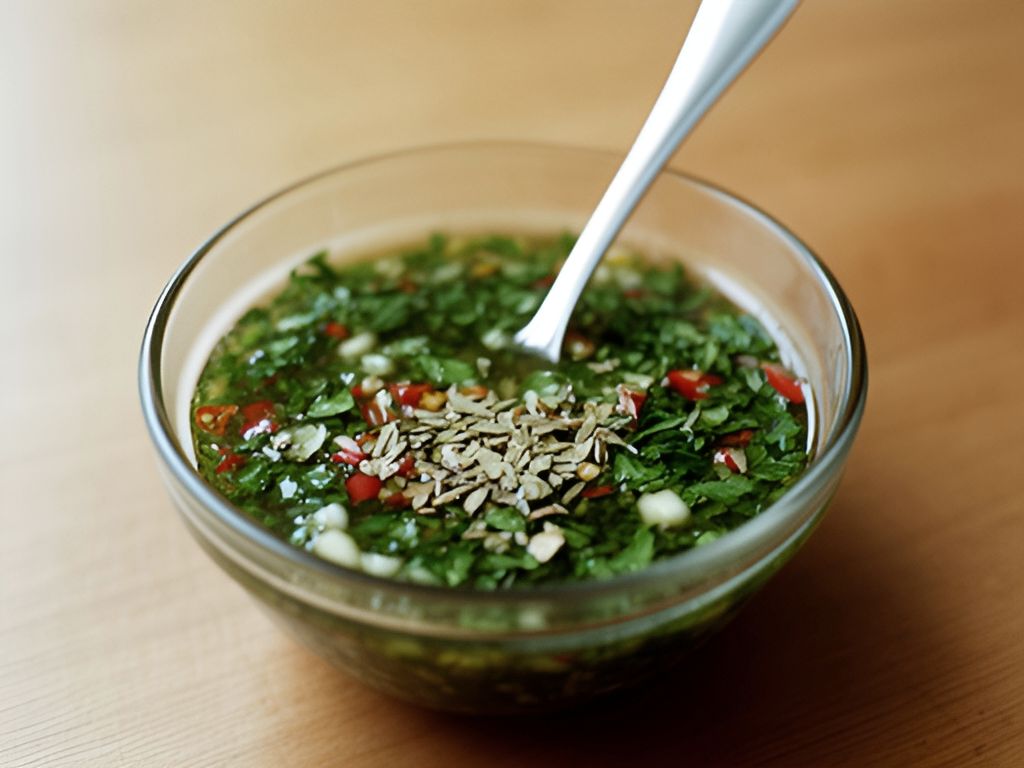
Yield: 250 ml
Portion: ~40ml
Prep: 15m
Cook: 5m
Rest: 2h
Total: 2h 20m
Ingredients
Salmuera (start first)
- 100 ml water, just boiled — you will use about 60ml of the finished brine
- 4 g coarse salt, plain coarse salt; a finishing salt is wasted once it dissolves
Herb base
- 60 g flat-leaf parsley, leaves and fine stems only, picked the day you make it, washed and properly dried
- 4 cloves garlic, peeled — measure by clove, never by feel
- 1 tbsp dried oregano, whole-leaf Greek or Sicilian, not dusty pre-ground
- 1 red chilli, finely chopped, or 1 tsp dried chilli flakes
- 1 fresh bay leaf, Mallmann's touch; removed before serving(optional)
Acid and oil
- 60 ml aged red wine vinegar, the sauce's spine; worth a proper bottle from a Basel épicerie
- 120 ml extra virgin olive oil, robust and flavourful rather than your most delicate finishing oil
Method
Salmuera (start first)
- 1
Bring the 100 ml water to the boil, take it off the heat and stir in the 4 g coarse salt until it disappears completely. Set aside to cool to room temperature, about 30 minutes.
30moff the heatThe brine must be fully at room temperature before it touches the herbs. Warm brine cooks and wilts fresh parsley, dulls the green and kills the raw brightness you are protecting. Do not cool it under the tap either: diluting it dilutes the seasoning. Cooling is the rate-limiting step, which is why it goes first.
Salmuera: Brine-Setting Fresh HerbsTip: Mallmann's calibration tell: if the salt will not dissolve completely, there is too much for the water. The cooled brine should be perfectly clear with nothing settled at the bottom.
Mise en place
- 2
While the brine cools, pick the 60 g parsley leaves and fine stems off the coarse stalks and discard the stalks. Dry the leaves thoroughly. Peel the 4 cloves garlic. Measure the 60 ml vinegar and 120 ml olive oil into separate vessels. Have ready 1 tbsp dried oregano, 1 red chilli, finely chopped, and 1 fresh bay leaf.
5mHand-Chopping Herbs for Raw SaucesTip: Wet leaves slide and bruise under the knife instead of cutting cleanly, and the surface water dilutes the sauce. Spin or pat them properly dry.
Chop by hand
- 3
With your sharpest knife, chop the 60 g parsley and 4 cloves garlic together, rocking the blade and scraping the pile back together every few passes, turning the board a quarter turn each time. Stop while the pieces are still visible: small enough to coat a forkful of meat, large enough to read as individual flecks. The garlic should be genuinely fine.
6msharp chef's knifelarge boardNo food processor. Blades crush and tear rather than shear, rupturing cells that bleed chlorophyll and bitter compounds, and the extra surface area oxidises fast. The result is a muddy, pasty, faintly bitter sauce within the hour. A sharp knife shears cleanly and keeps the sauce loose and green.
Hand-Chopping Herbs for Raw SaucesTip: At this dose the garlic should perfume the sauce, not ambush it. Above 120g of parsley, chop in batches so the bottom of the pile is cut rather than crushed.
Macerate, then oil
- 4
Tip the parsley and garlic into a glass or ceramic bowl. Add the 1 tbsp dried oregano, the chopped chilli and the bay leaf if using. Pour over the 60 ml red wine vinegar and about 60ml of the cooled salmuera and stir. Leave 5–10 minutes.
10mThis is the maceration window that does the real work. Salt and acid reach the wet herbs before any oil can seal them, which seasons them from the inside, rounds off the raw garlic and fixes the colour: acid on freshly cut leaves slows the slide of chlorophyll into olive-brown pheophytin. Use a non-reactive bowl; aluminium gives the acid a metallic note.
Salmuera: Brine-Setting Fresh HerbsTip: Dried oregano is the authentic choice and the better one here: it rehydrates in the brine and vinegar and releases its oils into the liquid in a way fresh does not. The 2:1 oil-to-vinegar ratio is deliberately sharp for fatty cuts; for leaner meat, hold back 15ml of the vinegar and add it to taste at the end.
- 5
Only now pour in the 120 ml extra virgin olive oil, slowly, while stirring. Taste and correct: a splash more salmuera if it needs salt, more vinegar if it needs edge.
1mOil always goes last. It is hydrophobic and coats everything it touches, so added early it shrink-wraps the herbs and blocks the water-soluble salt and acid from getting in. You are not building an emulsion: the sauce should look loose, spoonable and slightly separated, not creamy.
Salmuera: Brine-Setting Fresh Herbs
Rest and serve
- 6
Cover and rest at room temperature for at least 2 hours, or better, overnight in the fridge. If refrigerated, take it out 30–60 minutes before serving so the olive oil loosens and the aromatics wake up. Stir, re-taste, and fish out the bay leaf before serving.
2hThe rest is not a formality. The Argentine line is that today it is good and tomorrow it is better: overnight the garlic mellows, the oregano comes forward and the sauce harmonises. Thirty minutes is the floor, not the target.
Tip: Keep any leftover salmuera. A splash stirred into a batch that has been in the fridge a few days re-seasons and freshens it.
Allergens
Dietary
Storage & Shelf Life
Refrigerated
Temperature: 0-4°C
Shelf life: 21 days
Freeze: Yes
Never heat it. Take it out of the fridge 30–60 minutes before serving so the oil un-stiffens, stir, taste, and adjust with a splash of salmuera or vinegar. Frozen cubes thaw in the fridge overnight or at room temperature in about an hour.
Plating
Spooned over sliced grilled meat at the table, never tossed through it, with the rest passed in a bowl. It should sit loose and glossy with the herbs distinct and the oil visibly separate.
Garnish: None — it is the garnish
Serve in: Small glass or ceramic bowl with a spoon
Temperature: Room temperature
The Story Behind This Dish
“The Argentine and Uruguayan raw herb sauce of the asado, built on parsley, dried oregano, garlic, vinegar and oil, and traditionally spooned over grilled beef at the table. The starting version was already on the right side of every major decision: flat-leaf parsley, hand-chopped, oil last, a sharp 2:1 ratio for fatty cuts. The one thing it lacked is the salmuera, the cooled salt brine at the centre of Francis Mallmann's chimichurri in Seven Fires. Delivering the salt as brine rather than dry grains does four jobs at once: it seasons the herbs from the inside, mellows the raw garlic without a 24-hour wait, loosens the texture into a proper infusion, and keeps the green from going army-drab overnight. The bay leaf and the switch to dried oregano come from the same source. None of it modernises the sauce; it moves it closer to the gaucho original.”
Wine pairing: Follows the meat it is served with. With grilled beef or pork, a Mendoza Malbec has the fruit to stand up to the vinegar.
Disclaimer: The information provided in this recipe, including preparation methods, storage guidelines, and shelf-life recommendations, is for general guidance only. We accept no responsibility for any foodborne illness or adverse effects resulting from the preparation, handling, storage, or consumption of food made using this recipe. Always follow safe food handling practices and consult official food safety guidelines.
Comments are not configured yet.