Frango com Alheira Gratinado
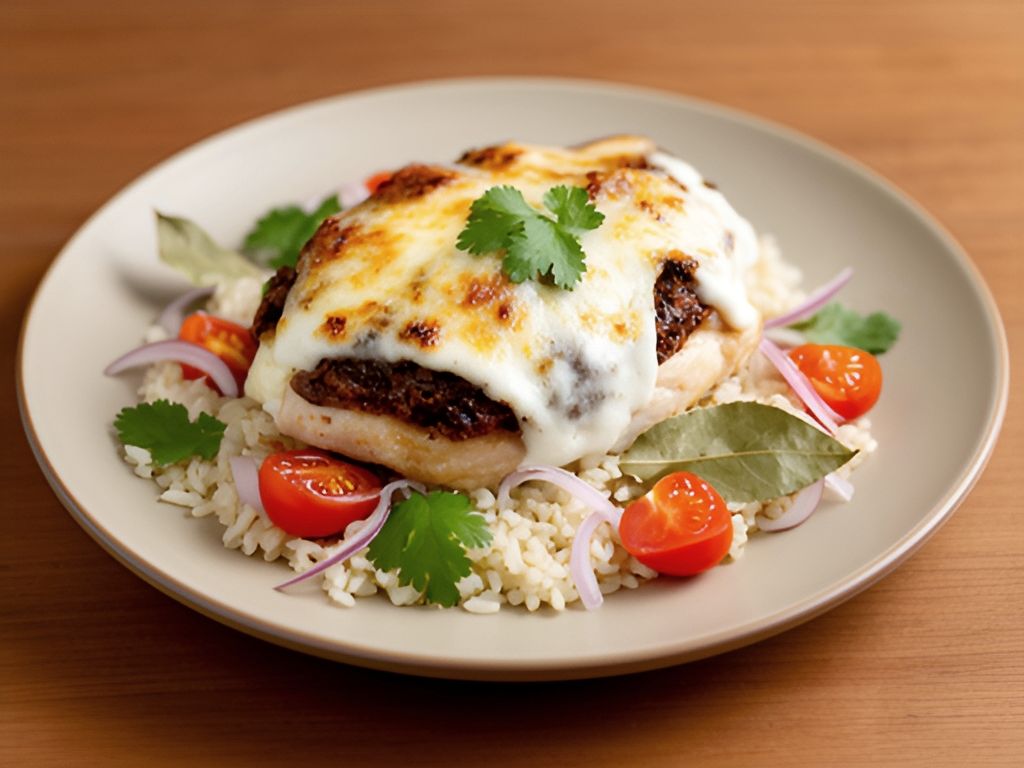
Butterflied chicken under a browned alheira-and-cream paste, gratinated fast under the grill so the breast stays juicy
Yield: 4 portions
Portion: 1 topped breast (~330g) plus rice and salad
Prep: 20m
Cook: 30m
Rest: 5m
Total: 55m
Ingredients
Chicken
- 720 g chicken breasts, 4 breasts of ~180g, butterflied to an even ~1.5cm
- fine salt, with restraint — the alheira, cheese and sun-dried tomato all bring salt, to taste
- black pepper, freshly ground, to taste
- 30 ml olive oil, cooking grade for searing, or HOLL rapeseed oil
Rendered alheira paste
- 300 g alheira, 2 sausages, casing removed, filling crumbled — a Mirandela, Vinhais, Barroso-Montalegre or game (de caça) alheira if you can find one
- 15 ml olive oil
- 60 ml dry white wine
- 60 ml lactose-free double cream, binds exactly like standard cream, but reads slightly sweeter
Gratin topping
- 150 g low-moisture mozzarella, grated or thinly sliced — not fresh ovoline, which weeps
- 60 g oil-packed sun-dried tomatoes, drained and sliced
- 30 g Sbrinz AOP, finely grated, as an aged-cheese layer under the mozzarella(optional)
- 30 g panko, tossed in 1 tbsp of the amber alheira oil for a croquette-like crust(optional)
Bay-scented rice
- 300 g rice, basmati or Carolino
- 1 bay leaf
- salt, for the cooking water, to taste
Tomato, onion and coriander salad
- 2 ripe tomatoes, quartered and sliced
- ½ red onion, thinly sliced
- 15 g fresh coriander, a small handful, chopped
- 30 ml extra-virgin olive oil
- 15 ml balsamic vinegar
- 5 ml red wine vinegar, or lemon juice — the sharp acid the plate needs
- salt, a pinch on the onion, the rest to finish, to taste
Method
Mise en place
- 1
Pat the 4 chicken breasts (720 g) dry and butterfly each one: hand flat on top, knife parallel to the board, cut through the thick side to within ~1cm of the far edge, then open it like a book. Aim for an even ~1.5cm thickness.
8mThe goal is uniform thickness, not thinness. A whole breast is a wedge, and by the time the thick end is done the thin tail is chalk. Even thickness means the whole piece reaches temperature together, and it gives the topping a flat surface to sit and gratinate on.
Butterflying a Chicken Breast - 2
Season both sides lightly with fine salt and black pepper and leave the breasts out at room temperature while you build the paste.
1mTip: Cold-from-the-fridge meat cooks unevenly. Twenty minutes on the counter takes the chill off the centre. Go easy on the salt: three salty components are still to come.
- 3
Slit the casings of the 2 alheiras (300 g) lengthwise, peel them away and crumble the filling. Drain and slice the 60 g sun-dried tomatoes. Grate the 150 g mozzarella, and the 30 g Sbrinz if using. Preheat the oven to 200°C fan.
6mRendering Alheira into a Paste
Start the rice
- 4
Cook the 300 g rice in salted water with 1 bay leaf, by your usual method. It wants about 15 minutes and can then sit covered off the heat until the chicken is ready.
15mTip: The bay leaf is the whole intervention. It stops the rice being a blank slab under a big-flavoured main.
Render the alheira paste
- 5
Warm the 15 ml olive oil in a wide frying pan over medium-high heat and add the crumbled alheira. Break it up, then let it sit against the hot pan in patches, stirring only every 30–60 seconds, for 4–6 minutes, until it stops looking like wet paste, catches brown edges, and the oil around it turns amber and smells of toasted garlic and paprika.
6mmedium-highwide frying panThe filling is already cooked, so this is not about safety. It is about browning: Maillard reactions on the meat and the bread are where the smoke-garlic-paprika depth lives. Crumbled in raw and creamed, the sausage stays pale, gummy and one-note, the same dull result you get from microwaving an alheira. Do not stir constantly and do not crowd the pan, or it steams grey instead of colouring.
Rendering Alheira into a PasteTip: If you are doing the panko crust or the rice finish, spoon off 1 tbsp of the amber oil now, before the wine goes in.
- 6
Deglaze with the 60 ml dry white wine, scraping up the fond, and let it cook down for about a minute until the pan is nearly dry again.
1mmedium-highRendering Alheira into a PasteTip: This is the vinho branco step from the traditional Portuguese oven versions. It buys acid and depth that the cream alone cannot, on a plate that is otherwise short of acid.
- 7
Take the pan off the heat and stir in the 60 ml lactose-free double cream to bind it into a thick, spreadable paste. Taste and correct with a pinch of salt and a grind of pepper.
1moff the heatCream goes in off the heat so it does not catch or break. Lactose-free cream reads slightly sweeter because the lactose is already split into glucose and galactose; correct with salt, not more paprika. The alheira already carries plenty of garlic and paprika and extra spice muddies it. The paste should mound on a spoon and sit on the chicken without running; if it is loose, give it another minute back on the heat.
Rendering Alheira into a Paste
Sear and assemble
- 8
Wipe the pan, add the 30 ml olive oil and get it hot. Sear the breasts about 1.5 minutes per side, then move them to an oven tray, cut-side up.
4mhighoven trayColour on the outside only. The breasts finish in the oven; cooking them through now is the express route to dry chicken. Beyond 4 breasts, sear in batches so the pan does not drop temperature and poach them.
- 9
Blanket each breast with the alheira paste. Scatter the 30 g Sbrinz over the paste if using, then top with the 150 g mozzarella and the 60 g sliced sun-dried tomatoes. If doing the crust, toss the 30 g panko with the reserved tablespoon of alheira oil and press it over the top.
3mLow-moisture mozzarella is deliberate. Fresh mozzarella weeps water as it heats; the water pools on the paste, dilutes it, cools the surface and stops it browning. If fresh is all you have, slice it and blot it hard between paper, and accept a wetter top.
Gratin Finish over Lean ProteinTip: The Sbrinz layer adds aged-cheese umami under the melter. The panko gives back some of the crunch a fried alheira is prized for, and which a creamed paste otherwise throws away.
Bake, grill, rest
- 10
Bake at 200°C fan for 10–12 minutes, until the thickest part of a breast reads 63–64°C on a probe.
12m200°C fanprobe thermometerPull on temperature, not on the look of the cheese. Cheese browning and breast doneness run on different clocks, and the breast loses: past ~65°C the fibres contract and squeeze out their water. 74°C is an instantaneous kill temperature; the same pasteurisation is reached at lower temperatures held for time. At 63–64°C, then held under a hot cheese blanket while it rests, the breast is safe and far juicier than one driven to 74°C. Colour and clear juices are unreliable cues in chicken; use a probe.
Gratin Finish over Lean Protein - 11
Switch to the grill on high, rack near the top, for 2–3 minutes to blister and gold the cheese fast without cooking the chicken further. Stay at the oven.
3mgrill, highWith lactose-free cream in the paste, the surface sugars catch a shade sooner than you expect. The line between golden and burnt is seconds. The moment you smell toasted cheese, you are nearly there.
Gratin Finish over Lean Protein - 12
Rest the tray for 5 minutes before serving.
5mGratin Finish over Lean ProteinTip: Carryover takes the breast to ~67–68°C under the molten cheese and keeps it in the pasteurising band for minutes. The top also sets so it cuts cleanly.
Salad and rice
- 13
While the chicken bakes, slice the ½ red onion thinly, toss it with a pinch of salt and leave it 5 minutes. Quarter and slice the 2 tomatoes and chop the 15 g coriander.
5mTip: The salt draws out some of the onion's juice and knocks back its harsh raw bite.
- 14
Whisk the 30 ml extra-virgin olive oil with the 15 ml balsamic and 5 ml red wine vinegar (or lemon). At the last moment, toss the tomato, onion and coriander with the dressing and salt to taste.
2mBalsamic alone is sweet, and the plate is already rich and faintly sweet from the cream, the sun-dried tomato and the lactose-free dairy. The sharp vinegar is what cuts through the alheira, cheese and cream. Dress last so the onion does not weep and the salad stays live.
- 15
Fluff the rice and lift out the bay leaf. If you reserved alheira oil and did not use it all on the panko, stir a spoonful through.
1mTip: The alheira oil through the rice is optional and very good.
Allergens
Storage & Shelf Life
Refrigerated
Temperature: 0-4°C
Shelf life: 2 days
Freeze: Not recommended
Best eaten straight from the grill; reheated breast is never as juicy. If you must, reheat covered on conventional heat at 160°C for about 10 minutes, uncovering for the last 2 to crisp the top. Do not use the oven's regeneration function: the steam splits the cream in the paste and turns the gratin soggy. Avoid the microwave, which makes alheira rubbery.
Plating
One breast per warm plate, cut once on the diagonal so the paste layer and the juicy interior show. Rice alongside, salad in its own small bowl or at the edge of the plate so the dressing does not run into the gratin.
Garnish: A few coriander leaves
Serve in: Warm dinner plates
Temperature: Hot — serve after the 5-minute rest
Techniques Used
The Story Behind This Dish
“A home recipe that turned out to belong to a real Portuguese family: peito de frango coberto com alheira, gratinated with cheese, almost always with rice alongside. The structure was right from the start; the fine-tune was about execution. Every Portuguese version fries the alheira before it goes near the chicken, and the original crumbled it in raw, so the paste came out beige and gummy. Rendering it until the fat runs amber is the single biggest change, and it moves the dish towards tradition, not away from it. The second change is separating two clocks that had been running as one. The original baked until the cheese was golden, and by then a butterflied breast is chalk. Now the breast comes out on a probe reading and the cheese browns in two minutes under the grill. The mozzarella and sun-dried tomato are an Italian-leaning flourish rather than strict Trás-os-Montes, but well within the spirit of how alheira gets used today.”
Wine pairing: A Vinho Verde Alvarinho or a crisp Douro white — enough acidity to cut the alheira, cream and cheese. A light, slightly chilled Portuguese red also works.
Disclaimer: The information provided in this recipe, including preparation methods, storage guidelines, and shelf-life recommendations, is for general guidance only. We accept no responsibility for any foodborne illness or adverse effects resulting from the preparation, handling, storage, or consumption of food made using this recipe. Always follow safe food handling practices and consult official food safety guidelines.
Comments are not configured yet.