Gambas ao Alhinho
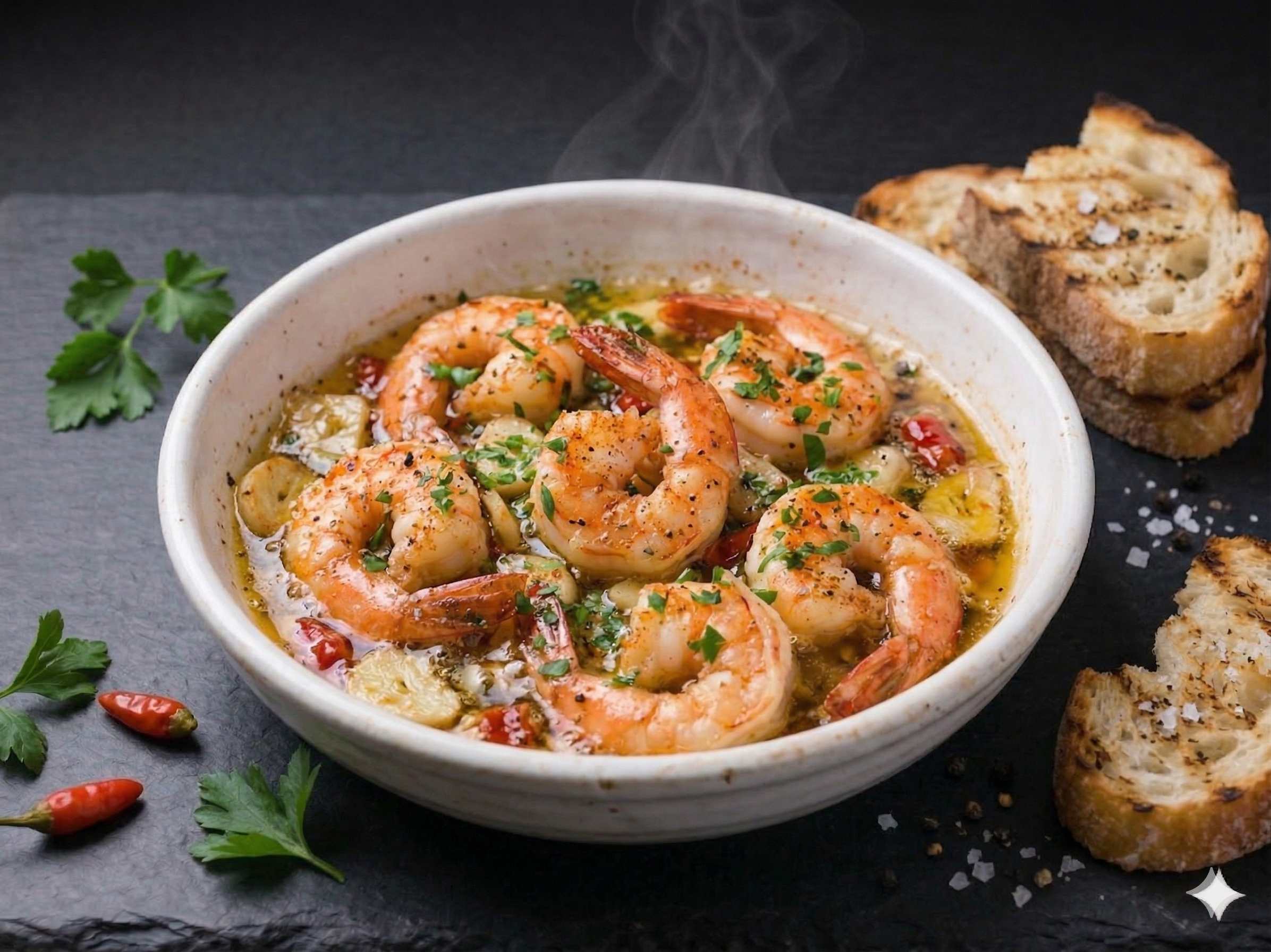
Algarve-style garlic shrimp in olive oil, with chili, white wine, and coriander
Yield: 4 portions
Portion: ~100g shrimp + sauce
Prep: 15m
Cook: 15m
Rest: 30m
Total: 1h
Ingredients
Shrimp & dry brine
- 400 g large shrimp, peeled, deveined, heads reserved if available (20/30 count per kg)
- 1 tsp kosher salt, for dry brine
- 0.3 tsp baking soda, for dry brine
Garlic-oil infusion
- 100 ml extra-virgin olive oil, also serves as the cooking medium throughout
- 8 cloves garlic, thinly sliced 2mm; rest at room temperature 10 minutes before use
- 2 pieces dried piri-piri peppers, seeded and roughly chopped; substitute guindilla or 1 small fresh red chili sliced into rings
- 2 tbsp fresh coriander stems, finely chopped; leaves separated and reserved for garnish
- 0.5 tsp sweet smoked paprika (pimentón de la Vera)
Pan sauce
- 70 ml dry white wine, increase to 100ml if omitting brandy
- 50 ml brandy, Portuguese aguardente or Spanish brandy preferred(optional)
- 30 ml fresh lemon juice, about 1 large lemon; divided into two 15ml additions
- 20 g cold butter, cubed into 1cm pieces; kept cold until the final emulsion step
To serve
- 2 tbsp fresh coriander leaves, picked, from coriander bunch used for stems
- 4 slices crusty bread, sliced and lightly warmed
Method
Dry-brine the shrimp
- 1
Peel and devein the shrimp, reserving the heads if present. Pat thoroughly dry with paper towels. Toss with 1 tsp kosher salt and ¼ tsp baking soda until evenly coated. Spread on a paper towel–lined plate and refrigerate uncovered for 20–30 minutes.
30mShrimp Dry Brine (Salt + Baking Soda)Tip: This is your hands-free window — slice the garlic, prep the chili, and measure all liquids. The baking soda raises surface pH and accelerates Maillard browning; the salt draws out and reabsorbs moisture for firmer, snappier texture.
Build the garlic-infused oil
- 2
If using shrimp heads: place the heads and any shells in a cold pan with all 100ml of olive oil. Set over medium-low heat and press the heads gently with a wooden spoon to release their juices. Cook 3–4 minutes until the heads turn deep coral-pink and the oil takes on a faint orange tint. Strain through a fine-mesh sieve into a clean bowl, pressing to extract every drop. Discard the solids. Use this shrimp-infused oil as your cooking medium for the remaining steps. If no heads are available, use the olive oil straight.
4m28cm wide pan or cazuelafine-mesh sieveTip: Head-on shrimp release glutamates and carotenoids directly into the oil, adding a layer of savory sweetness that runs through the entire dish.
- 3
Place the sliced garlic in the pan with the (shrimp-infused) olive oil. Start cold — cold oil, cold pan. Turn heat to low. Cook 3–4 minutes, stirring occasionally, until the garlic is fragrant and just barely turning pale gold at the edges. Add the chopped chili and coriander stems during the last minute. The oil should shimmer but not bubble aggressively. Using a slotted spoon, transfer the garlic, chili, and coriander stems to a small bowl, letting excess oil drain back into the pan. Set aside.
4mStart cold and heat slowly — this extracts fat-soluble aromatics without burning. Once garlic reaches pale gold, it continues cooking from residual heat. Remove it immediately; the difference between golden and bitter is a matter of seconds.
Garlic-Oil Infusion (Two-Stage Method) - 4
With the pan still over low heat and the aromatics removed, add ½ tsp pimentón dulce to the oil. Stir constantly for 20–30 seconds until the oil turns warm reddish-amber and smells gently smoky. Immediately proceed to the next step.
1mPimentón burns in under 60 seconds. This step is brief and intentional — you are extracting fat-soluble pigment and flavor, not cooking the spice. If it darkens to brown, discard the oil and start fresh.
Sear the shrimp
- 5
Remove the brined shrimp from the fridge and pat dry one final time with fresh paper towels. Increase heat to medium-high. When the oil shimmers and a water drop sizzles on contact, add the first batch of shrimp (maximum 200g in a 28cm pan) in a single layer with space between each piece. Do not touch them. Cook 90 seconds to 2 minutes until the bottom edges turn opaque-pink and golden-brown spots appear on the pan-contact side. Flip and cook the second side 60–90 seconds. The shrimp should be opaque outside with a thin translucent line still visible at the thickest point. Transfer to a warm plate. Repeat with any remaining shrimp.
6mRemove shrimp when they still look slightly underdone at the center — carryover heat will finish them. If they look perfect in the pan, they will be overcooked on the plate. Maximum 200g per batch prevents the pan temperature drop that causes steaming instead of searing.
Shrimp Searing & Doneness Control
Deglaze and finish
- 6
Return all shrimp to the pan. If using brandy: pour the 50ml over the shrimp in the hot pan and tilt the pan toward the flame to ignite, or touch a long lighter to the liquid surface. The flames will burn 10–15 seconds and self-extinguish. If not flambéing, add the brandy and let it bubble vigorously for 30 seconds. Either way, immediately follow with 70ml white wine. Scrape the pan bottom with a wooden spoon to dissolve any fond. Let the liquid bubble and reduce by about half — roughly 60 seconds.
2mTip: Flambé pyrolyzes some alcohol into additional flavor compounds and adds caramelized brandy notes that complement the sweetness of the shrimp. If skipping brandy entirely, increase wine to 100ml.
- 7
Remove the pan from the heat. Wait 10 seconds to let the temperature drop just below sizzling. Add 15ml (half) of the lemon juice and swirl. Return the reserved garlic, chili, and coriander stems to the pan. Add the cold butter cubes and swirl the pan continuously for 15–20 seconds until the butter melts into a glossy, opaque sauce that coats the shrimp. If the butter sizzles on contact, the pan is too hot — lift off the burner and keep swirling. Add the remaining 15ml lemon juice, taste, and adjust salt if needed.
2mThe pan must be off the heat or just barely warm when the butter goes in. Too hot and the butter breaks into greasy pools. Cold butter added gradually while swirling creates a stable emulsion — the sauce should look glossy and opaque, not oily and separated.
Cold Butter Finish (Monter au Beurre) - 8
Scatter the fresh coriander leaves over the top. Serve immediately in the pan if presentable, or transfer to a warmed earthenware dish. Bring crusty bread to the table — tearing bread through the garlic-pimentón oil is the essential accompaniment, not an afterthought.
1mTip: A warmed earthenware cazuela keeps the oil gently bubbling at the table, which is both traditional and functional.
Allergens
Storage & Shelf Life
Refrigerated
Temperature: 0-4°C
Shelf life: 1 day
Freeze: Not recommended
Best eaten immediately. If reheating, warm very gently in a wide pan over low heat with a splash of white wine. Avoid microwaving — the butter emulsion will break and the shrimp will overcook.
Plating
Serve in the pan or transfer to a warmed earthenware cazuela. The sauce should be glossy and just enough to pool at the bottom — the garlic slices, chili pieces, and coriander stems should be clearly visible in the oil.
Garnish: Fresh coriander leaves scattered over the top
Serve in: Cooking pan or warmed earthenware cazuela
Temperature: Hot — serve immediately with crusty bread alongside
Techniques Used
The Story Behind This Dish
“Gambas ao Alhinho is one of the defining dishes of the Algarvian table — a petisco meant for sharing, torn bread, and slow evenings. The shrimp are almost secondary to the oil: a deeply aromatic, garlicky, pimentón-stained liquid that accumulates the flavor of every stage — the shrimp heads, the slow-cooked garlic, the flambéed brandy, the white wine fond, and a final swirl of cold butter that ties it all together into a glossy, cohesive sauce. This version layers technique deliberately: a dry brine for texture and seasoning; a cold-start garlic infusion for flavor without bitterness; a precise doneness window carried through the sauce stage; and a butter emulsion finish borrowed from French bistro cooking but entirely at home in Portuguese cuisine.”
Wine pairing: Vinho Verde (Alvarinho), Douro Branco, or a dry Manzanilla sherry
Disclaimer: The information provided in this recipe, including preparation methods, storage guidelines, and shelf-life recommendations, is for general guidance only. We accept no responsibility for any foodborne illness or adverse effects resulting from the preparation, handling, storage, or consumption of food made using this recipe. Always follow safe food handling practices and consult official food safety guidelines.
Comments are not configured yet.