Hot Oil Peanut Noodles
Shaanxi-Sichuan fusion — You Po Mian meets dan dan peanut sauce
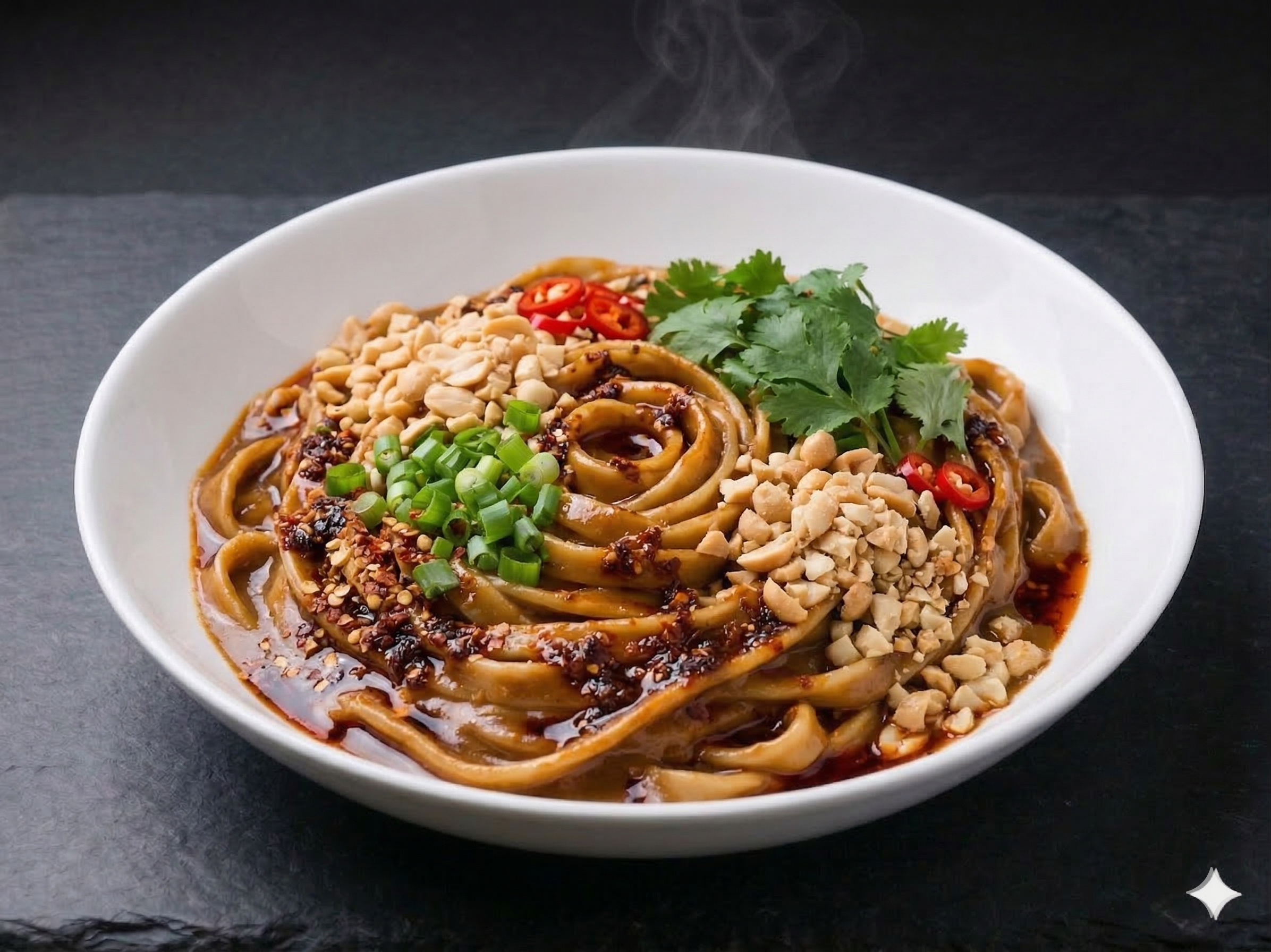
Yield: 2 portions
Portion: ~300g noodles + sauce
Prep: 15m
Cook: 10m
0Total: 25m
Ingredients
Spice-infused oil (Stage 1)
- 80 ml neutral oil, sunflower, rapeseed, or grapeseed — high smoke point
- 1 star anise, whole
- 5 cm cassia cinnamon stick, one piece
- 1 tsp Sichuan peppercorns
Sauce base
- 1 tbsp Chinese sesame paste (zhimajiang), toasted Chinese variety, not tahini
- 1 tbsp crunchy peanut butter
- 1.5 tbsp light soy sauce
- 0.5 tbsp dark soy sauce
- 2 tbsp Chinkiang (Chinese black) vinegar
- 0.5 tsp sugar
Aromatics (for blooming)
- 2 tbsp garlic, finely minced
- 1 tbsp fresh ginger, finely minced
- 2 tbsp shallot, finely diced
- 2 tbsp spring onion (white part), finely sliced
- 2 tsp chili crisp, Lao Gan Ma or Sichuan-style preferred
Noodles & garnish
- 200 g wide wheat noodles, knife-cut (dao xiao mian), biang biang, or thick udon
- 1 tbsp sesame seeds, toasted
- 2 tbsp spring onion (green part), finely sliced
- 1 fresh red chili, thinly sliced(optional)
- 0.5 tsp Chinkiang vinegar, for finishing drizzle(optional)
Method
Infuse the oil
- 1
Toast sesame seeds in a dry pan over medium heat until golden. Set aside to cool.
2m - 2
Combine the 80 ml neutral oil with star anise, cassia cinnamon, and Sichuan peppercorns in a small saucepan. Heat slowly over low heat to 95–105°C. Hold for 5–7 minutes — you should see tiny, lazy bubbles rising from the spices. Strain out the solids and set the infused oil aside.
7m95–105°C / 200–220°Fsmall saucepanfine-mesh strainerDo not exceed 105°C during the infusion — the spices should gently bubble, not fry. This extracts warm, deep spice notes without bitterness.
Hot Oil Blooming (油泼, Yóu Pō)
Build the sauce base
- 3
In a large heatproof bowl, combine the sesame paste, peanut butter, light soy sauce, dark soy sauce, Chinkiang vinegar, and sugar. Stir with chopsticks until you have a loose, uniform slurry.
2mHot Fat Emulsion Sauces (Peanut & Sesame Noodle Sauces)Tip: The paste will resist at first — keep working it. The liquid seasonings pre-dissolve into the nut paste and create the water phase for the emulsion.
- 4
Arrange the minced garlic, ginger, diced shallot, sliced spring onion white, and chili crisp on top of the slurry in the bowl. Mound the garlic slightly in the centre — do not spread flat.
1mTip: Mounding the aromatics creates varying heat exposure when the oil hits, producing a range of toastedness from the edges to the centre.
Cook the noodles
- 5
Bring a pot of water to a rolling boil. Cook the wide noodles according to package directions (typically 3–5 minutes for fresh, 8–10 for dried). Use the minimum amount of water practical — you need the cooking water to be starchy. Reserve 120 ml of cooking water before draining.
5mThe reserved cooking water is structurally critical for the emulsion — it's not just for loosening. If using fresh noodles that cook in under 2 minutes, the water won't be starchy enough. In that case, dissolve ¼ tsp cornstarch in 2 tbsp water as insurance.
Bloom and assemble
- 6
Reheat the strained infused oil to 185–195°C — the surface should shimmer with convection currents and the very first faint wisps of smoke. Test by dropping one small piece of garlic into the oil: it should sizzle vigorously but not instantly brown.
2m185–195°C / 365–383°FIf the oil is smoking steadily, it's too hot — remove from heat for 20 seconds. Garlic goes from golden to burnt in under 3 seconds above 200°C.
Hot Oil Blooming (油泼, Yóu Pō) - 7
Pour the hot oil in a steady stream over the centre of the aromatics in the bowl. You should hear an immediate, aggressive sizzle. Stir within 5 seconds using chopsticks to distribute heat evenly through the aromatics and sauce base.
1mPour from about 15 cm above the bowl — not too high (splatter risk), not too timidly (you need the shock). Commit to the pour.
Hot Oil Blooming (油泼, Yóu Pō) - 8
Add the drained noodles to the bowl. Add 2–3 tbsp of the reserved starchy cooking water. Toss vigorously with chopsticks for 15–20 seconds until the sauce transforms from separated pools into a unified, glossy coating on every strand.
1mHot Fat Emulsion Sauces (Peanut & Sesame Noodle Sauces)Tip: If the sauce looks greasy or broken, add another tablespoon of cooking water and toss again. If too thin, toss for another 10 seconds — the heat will evaporate excess water.
- 9
Let the bowl rest for 60 seconds — this allows the peanut butter emulsion to stabilise and the starches to thicken slightly, resulting in better sauce cling. Give a final toss.
1m - 10
Top with toasted sesame seeds, sliced spring onion greens, fresh red chili (if using), and a finishing drizzle of raw Chinkiang vinegar (½ tsp per portion). Serve immediately.
1mTip: The finishing vinegar adds a bright, uncooked acid lift that the initial vinegar lost when the hot oil hit it.
Allergens
Dietary
Storage & Shelf Life
Refrigerated
Temperature: 0-4°C
Shelf life: 1 day
Freeze: Not recommended
Best eaten immediately. If reheating, add a splash of hot water and toss — the emulsion will partially reform. Microwave will break the sauce.
Plating
Serve directly from the heatproof bowl, or transfer to a wide shallow bowl. The noodles should look lacquered — glossy and evenly coated, not swimming in sauce.
Garnish: Toasted sesame seeds, spring onion greens, sliced fresh red chili, finishing drizzle of Chinkiang vinegar
Serve in: Wide shallow bowl or the assembly bowl
Temperature: Hot — serve immediately
The Story Behind This Dish
“This dish is a smart fusion of two distinct Chinese noodle traditions: You Po Mian from Shaanxi — the dramatic hot oil technique — and Dan Dan Mian from Sichuan — the rich peanut-sesame sauce. Neither tradition would traditionally include the other's signature element, but the combination works beautifully. The peanut butter adds body and richness that straight You Po Mian lacks, while the hot oil blooming gives more immediacy and drama than a typical cold-mixed dan dan sauce. The two-stage oil infusion — first a slow warm-spice extraction, then a flash bloom over raw aromatics — is the technique that separates a good homemade version from one that tastes like a restaurant.”
Wine pairing: Cold Tsingtao beer, or a dry off-dry Riesling Kabinett
Disclaimer: The information provided in this recipe, including preparation methods, storage guidelines, and shelf-life recommendations, is for general guidance only. We accept no responsibility for any foodborne illness or adverse effects resulting from the preparation, handling, storage, or consumption of food made using this recipe. Always follow safe food handling practices and consult official food safety guidelines.
Comments are not configured yet.