Lemon Posset with Berries
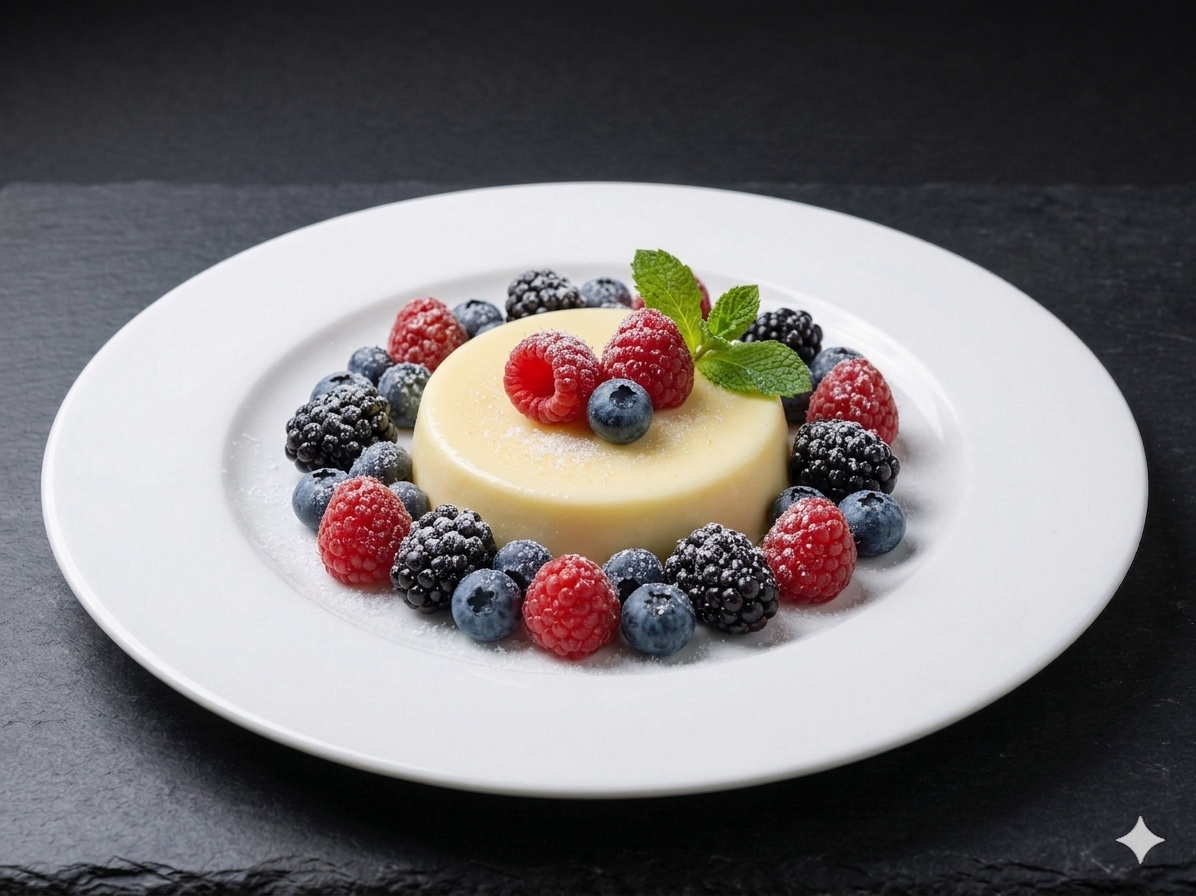
A silky, set cream dessert with bright lemon flavour, finished with olive oil and flaky salt, topped with fresh berries
Yield: 4 portions
Portion: ~100 ml
Prep: 10m
Cook: 10m
Rest: 4h 30m
Total: 4h 50m
Ingredients
Posset
- 400 ml double cream (Vollrahm)
- 100 g sugar
- 0.3 tsp fine sea salt
- 1 lemons lemon zest, finely grated
- 70 ml fresh lemon juice, about 3 lemons, strained
To serve
- to taste good extra-virgin olive oil, a few drops per serving
- to taste flaky salt (Maldon or fleur de sel), a tiny pinch per serving
- to taste raspberries or blueberries, fresh
- to taste shortbread or butter biscuits(optional)
Method
Prepare the lemons
- 1
Finely grate the zest from the lemons.
Tip: Zest the lemons before juicing — they are easier to zest whole.
- 2
Juice the lemons and strain the juice to remove pulp and seeds.
strainerAlways use fresh lemon juice — bottled juice often prevents proper setting.
Heat and reduce the cream
- 3
Place the cream, 100 g sugar, and salt in a saucepan. Bring slowly to a gentle boil, stirring so the sugar dissolves completely.
5mgentle boilsaucepan - 4
Once boiling, reduce slightly and simmer until the mixture has reduced by roughly one-fifth — about 5–8 minutes. To check, pour into a measuring cup: 400 ml of cream should reduce to approximately 320 ml. This concentrates the cream for a reliable, silky set every time.
8msimmermeasuring cupReduce to volume rather than by time — burner output and pan width vary. Check at 5 minutes.
Add lemon and strain
- 5
Remove the pan from the heat. Stir in the lemon zest and lemon juice. The acidity will begin thickening the mixture immediately.
off heatAlways add the juice off the heat — adding it to boiling cream can cause grainy, uneven curdling.
- 6
Strain the mixture through a fine-mesh sieve into a jug, pressing gently. This removes zest particles and any micro-curds, producing a noticeably silkier texture.
fine-mesh sievejug - 7
Pour the strained mixture into 4 small glasses or ramekins.
glasses or ramekins
Cool and chill
- 8
Let the possets cool at room temperature for 20–30 minutes. This prevents condensation forming on the surface and allows the initial set to begin gently.
30mroom temperature - 9
Refrigerate at least 4 hours, preferably overnight, until the posset is fully set and silky.
4hrefrigerated
Serve
- 10
Drizzle a few drops of good olive oil over each posset and add a tiny pinch of flaky salt. Top with fresh berries. A small shortbread biscuit on the side adds a pleasant texture contrast.
Tip: The olive oil and salt are essential, not decorative — the oil adds savory depth and the salt amplifies every flavour in the posset.
Allergens
Dietary
Storage & Shelf Life
Refrigerated
Temperature: 0-4°C
Shelf life: 3 days
Freeze: Not recommended
Do not reheat — serve cold directly from the fridge.
Plating
Serve in small glasses or ramekins, drizzled with olive oil and flaky salt, topped with fresh berries. Optionally place a shortbread biscuit alongside.
Garnish: Fresh berries, drizzle of extra-virgin olive oil, flaky salt
Serve in: Small glasses or ramekins
Temperature: Cold — serve well chilled
The Story Behind This Dish
“Only three ingredients in the base — cream, sugar, and lemon — yet the result is impossibly silky and elegant. A posset is the ultimate make-ahead dessert: no gelatine, no eggs, just the magic of acid setting cream. The olive oil and flaky salt finish lifts it from simple to memorable.”
Wine pairing: A late-harvest Riesling or Moscato d'Asti
Disclaimer: The information provided in this recipe, including preparation methods, storage guidelines, and shelf-life recommendations, is for general guidance only. We accept no responsibility for any foodborne illness or adverse effects resulting from the preparation, handling, storage, or consumption of food made using this recipe. Always follow safe food handling practices and consult official food safety guidelines.
Comments are not configured yet.