Parmigiana di Melanzane
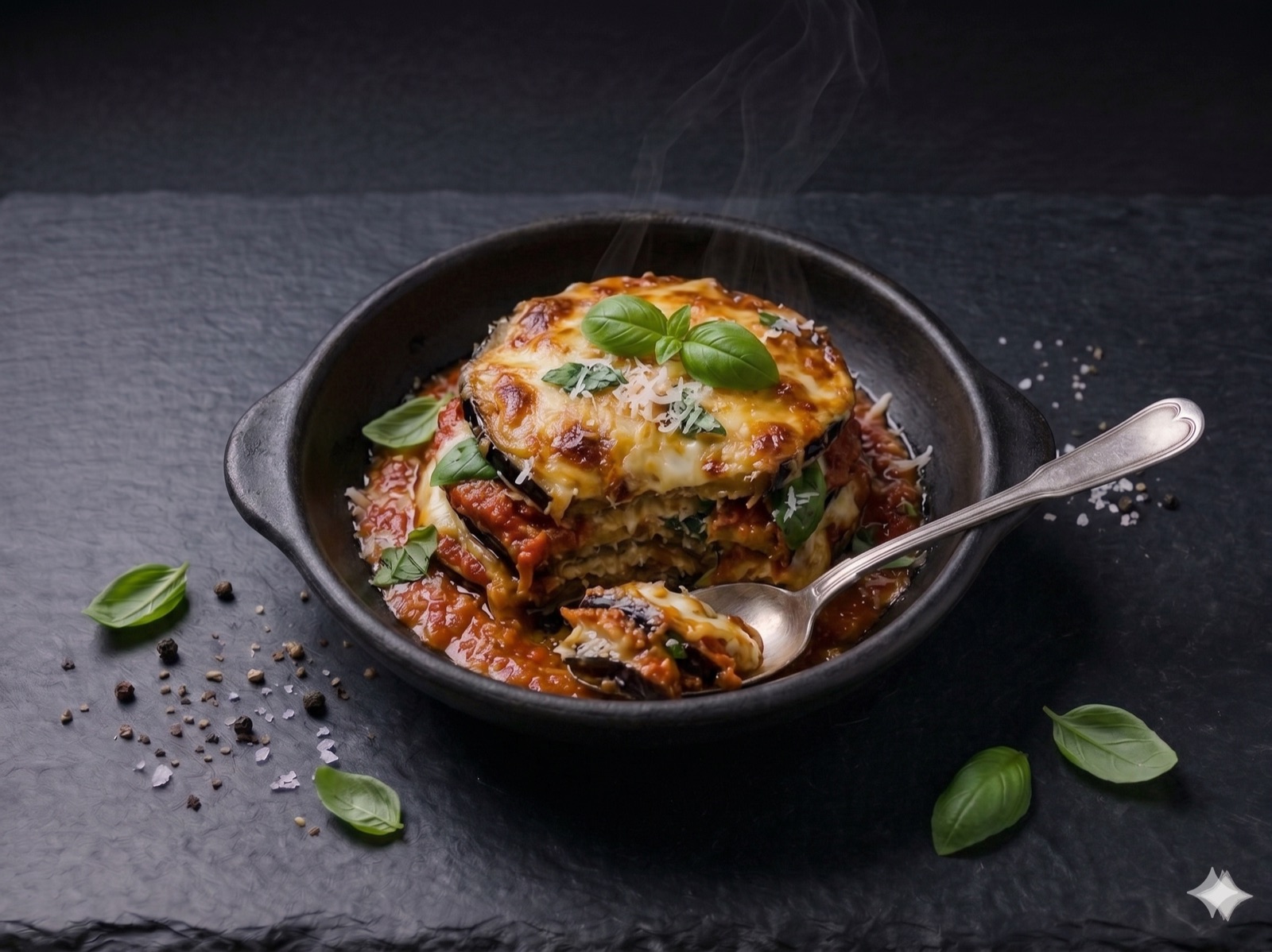
Lean, deeply concentrated baked aubergine with tomato, mozzarella and aged hard cheese in three full layers
Yield: 4 portions
Portion: main course (or 6 as a side)
Prep: 1h
Cook: 45m
Rest: 20m
Total: 2h 5m
Ingredients
For the aubergines
- 4 medium aubergines, ~1 kg total, Italian long or Swiss summer aubergines
- 1 tbsp coarse sea salt, for degorging
- 250 ml olive oil or HOLL rapeseed oil, for frying
- 4 tbsp 00 flour, for dusting before frying
For the tomato sauce
- 800 g canned whole peeled San Marzano DOP tomatoes, or 1 kg ripe summer tomatoes, peeled and seeded
- 2 garlic cloves, lightly crushed
- 2 tbsp extra-virgin olive oil, for the sauce
- a pinch peperoncino flakes, optional, for the sauce(optional)
For the layers and finish
- 250 g fior di latte or mozzarella di bufala Campana DOP, well-drained; lactose-free equivalent works identically
- 60 g Parmigiano Reggiano 30+ months or Swiss Sbrinz AOP 22+ months, finely grated
- 1 bunch fresh Genovese basil, stems for the sauce, leaves for layers and finish
- 1 tbsp extra-virgin olive oil, peppery Sicilian or Pugliese, for finishing
- to taste black pepper, freshly ground
Method
Degorge the aubergines
- 1
Cut the aubergines lengthwise into 7 mm slices (6 mm if oven-roasting). Use a sharp knife — dull blades tear the flesh and create channels for oil to enter. Layer the slices in a colander, salting each layer with coarse sea salt (about 1 tsp per medium aubergine total). Stack a plate on top, then a 1–2 kg weight, set the colander in the sink, and leave 45–60 minutes. You are not removing bitterness — you are partially collapsing the cell walls so the slices absorb less oil and hold their texture.
1hsharp knifecolanderDo not skip the weight — it doubles the moisture extraction. You should see a pool of brown liquid in the sink.
Degorging & Shallow-Frying Aubergine
Make the tomato sauce
- 2
Pour 2 tbsp olive oil into a wide pan over cold heat. Add the lightly crushed garlic cloves to the cold oil, then bring to medium. This extracts garlic flavour without browning it. Cook 3–4 minutes until the cloves are soft and golden but not coloured.
4mcold to mediumwide panTip: Garlic dropped into already-hot oil burns in seconds and turns acrid.
- 3
Hand-crush the tomatoes — do not blend, as blending whips in air and lightens the colour. Add them to the pan with a few basil stems and a pinch of peperoncino if using. Bring to a vigorous simmer with a splatter screen on, and reduce uncovered by 30–40% (from ~750 ml to about 500 ml). This takes 20–25 minutes in a wide pan. Stir occasionally.
25mmedium-highDo not cover the pan — covering traps steam and defeats the reduction.
Blooming Tomato Paste - 4
Off the heat, fish out the garlic cloves and basil stems. Pass through a food mill for the silkiest texture, or leave slightly rustic. Season with salt now, not at the start, as salt concentrates during reduction. Tear in 4–5 fresh basil leaves and stir. The sauce should taste round and slightly sweet with no harsh acid edge.
3mTip: If genuinely sharp, a pinch of sugar is acceptable — but good San Marzano shouldn't need it.
Prepare the mozzarella
- 5
Tear the mozzarella into rough 2 cm pieces and lay them on a doubled paper towel. Salt very lightly and leave for at least 30 minutes — fresh mozzarella is 50–60% water, and any moisture not pulled out here will flood the bake. Once drained, return the pieces to the fridge for the final 15–30 minutes before assembly.
30mCold, well-drained mozzarella firms the curd and reduces water release in the oven. Do not skip this, especially with bufala.
Rinse, dry and fry the aubergines
- 6
Rinse the slices thoroughly under cold running water — salt trapped in the collapsed flesh needs a few seconds per side. Then dry rigorously between paper towels, pressing firmly. Damp slices spatter in hot oil and steam rather than fry.
5mInadequate rinsing gives a brutally salty dish; damp slices will not brown.
Degorging & Shallow-Frying Aubergine - 7
Spread the 00 flour on a wide plate. Dust each slice and shake off the excess vigorously — you want the lightest possible coating. Heat the frying oil to 170–180°C, using a thermometer. Fry the slices in batches in a single layer, about 90 seconds per side, until evenly golden-amber. Let the oil recover to 180°C between batches. Drain on a wire rack over paper towels.
30m170–180°Cwide panthermometerwire rackBelow 160°C the slices absorb oil before browning; above 190°C the surface scorches. Crowding the pan drops the oil temperature instantly.
Degorging & Shallow-Frying Aubergine
Assemble
- 8
Preheat the oven to 200°C conventional heat (no fan). Use a ceramic or glass dish, ~22×16 cm and 5–6 cm deep. Spread 2–3 tbsp of tomato sauce thinly across the bottom to prevent sticking and create a steam buffer.
5m200°C conventionalceramic or glass baking dishTip: Avoid metal except heavy enamelled cast iron — metal transfers heat too aggressively at the edges.
- 9
Build three full layers, in this order each time: a single layer of aubergine slightly overlapping, ~4 tbsp tomato sauce spread evenly, a few torn basil leaves, about one-third of the mozzarella scattered (not in clumps), and about one-quarter of the grated hard cheese. Press gently with your palm after each layer to eliminate air pockets.
10mAim for bonding, not flooding — if sauce drips out when you slice the finished dish, you used too much.
- 10
For the top layer, do aubergine, then a slightly more generous spread of sauce, torn basil, and the remaining grated hard cheese only. No mozzarella on top — it turns into a rubbery cap, whereas parmigiano or Sbrinz crusts into the textural contrast you want.
3m
Bake and rest
- 11
Place the dish in the middle of the oven, immediately drop the temperature to 180°C, and bake for 30 minutes. Then raise to 200°C for the final 5–10 minutes to crisp the top. The dish is done when bubbling is visible across the entire top — not just the edges — and the top is golden-brown with some darker spots.
40m180°C then 200°CIf only the edges are bubbling and the centre looks still, give it another 5 minutes.
- 12
Rest 20 minutes uncovered. The interior is structurally fluid straight out of the oven and cannot be sliced cleanly without resting. Resting also brings the dish to optimal eating temperature (~55–65°C), where flavour perception is markedly more vivid.
20mResting is non-negotiable for clean slices.
- 13
Drizzle the finishing olive oil over the rested dish in a thin stream and scatter a few torn fresh basil leaves. Slice with a serrated knife or wide pie server and lift portions out with a flat spatula. A properly executed slice holds its shape on the plate with visible strata.
2m
Allergens
Dietary
Storage & Shelf Life
Refrigerated
Temperature: 0-4°C
Shelf life: 3 days
Freeze: Yes
Cover with foil and reheat at 150°C for 20 minutes, then 5 minutes uncovered. The dish genuinely improves the second day as the layers fuse and the flavour concentrates.
Plating
Serve from the baking dish at the table, or plate individual slices. A properly rested portion holds its shape for at least 30 seconds before settling, with visible layers of aubergine, sauce and cheese.
Garnish: A thin drizzle of peppery finishing olive oil and a few torn fresh basil leaves
Serve in: Ceramic or glass baking dish, or warm plates
Temperature: Warm — about 55–65°C, not piping hot
Techniques Used
The Story Behind This Dish
“This is a lean, deeply concentrated parmigiana — three full layers, properly rested, and genuinely better the next day. The optimized version drops the egg layer of the Silver Spoon original, which mutes the layer definition and adds a slight sulfur note over the long bake. The technique carries the dish: degorge the aubergines so they fry without going greasy, reduce the sauce hard so it bonds rather than floods, drain the mozzarella so it doesn't water down the bake, and rest the finished dish so it slices into clean strata. Swiss Sbrinz AOP is one of the rare cases where a local substitution beats the Italian original — slightly sweeter, less aggressive, with a beautiful calcium-crystal crunch on the crust.”
Wine pairing: A Sicilian Nero d'Avola or an Etna Rosso
Disclaimer: The information provided in this recipe, including preparation methods, storage guidelines, and shelf-life recommendations, is for general guidance only. We accept no responsibility for any foodborne illness or adverse effects resulting from the preparation, handling, storage, or consumption of food made using this recipe. Always follow safe food handling practices and consult official food safety guidelines.
Comments are not configured yet.