Plated Cheeseburger
Double-smashed patties, Raclette melted under a lid, an overnight burger sauce, and the bun's four jobs handed to the rest of the plate
Yield: 4 portions
Portion: 2 × 80g patties + ~60g sauce
Prep: 20m
Cook: 15m
Rest: 3h
Total: 3h 35m
Ingredients
Burger sauce (the day before, or at least 3 hours ahead)
- 200 g mayonnaise, full-fat, egg-yolk based — reduced-fat versions thin out and weep
- 30 g ketchup
- 10 g yellow mustard, not Dijon, which is too sharp and pulls the sauce somewhere else
- 50 g gherkins, chopped very fine, drained and patted dry
- 10 ml gherkin brine
- 10 ml white wine vinegar
- 5 g caster sugar
- 1 tsp smoked paprika
- ½ tsp onion powder, powder, not fresh — fresh allium stays harsh in a cold emulsion
- ½ tsp garlic powder
- ½ tsp fine salt
- black pepper, plenty, freshly ground, to taste
Smashed patties
- 640 g coarse-ground beef, 20–25% fat, ground once, coarse, the same day — Hals/Nacken as the base with Federstück or Rindsfett to bring up the fat; or 480g Hals + 120g Spannrippe + 40g beef fat
- 1½ tsp fine salt, for the surface only, across all eight patties
- 1 tsp coarse black pepper
- 15 ml HOLL rapeseed oil, or another neutral high-smoke-point oil; a film per batch
- 4 slices Raclette du Valais AOP, cut 3–4mm, sized to the patty
On the plate
- ½ iceberg lettuce, shredded, 20 minutes in ice water, spun bone dry
- 2 tomatoes, firm, sliced 5mm
- a pinch of fine salt, for the tomato slices
- 1 small onion, sliced paper-thin — smashed into the patties (recommended) or soaked in ice water and served raw
- 8 crunchy dill gherkins, sliced lengthways — not the soft sweet kind
Crisp potato (a component, not a side)
- 600 g frying potatoes, cut into fries and held in cold water — or wedges, rösti-style shreds
- HOLL rapeseed oil, enough for a fryer or a deep pan, for frying
- salt, flaky salt belongs here, not on the meat, to taste
Optional: sodium-citrate slab (instead of the Raclette)
- 200 g Gruyère or aged cheddar, grated yourself — bagged cheese is coated in anti-caking starch(optional)
- 100 ml water or beer, not lactose-free milk, which tastes sweeter and scorches faster(optional)
- 8 g sodium citrate, 4% of the cheese weight — weigh it(optional)
To finish
- Sbrinz AOP, shaved raw over the finished stack — never melted, to taste(optional)
Method
Burger sauce (the day before, or at least 3 hours ahead)
- 1
Whisk the 200 g mayonnaise, 30 g ketchup, 10 g yellow mustard, 10 ml gherkin brine and 10 ml white wine vinegar together until the colour is completely even.
2mLiquids into the base first. Thin liquid disperses evenly into a set emulsion; added on top of a mixture that already holds solids, it leaves streaks you never fully lose.
Cold Emulsified Compound Sauces - 2
Whisk in the 5 g caster sugar, 1 tsp smoked paprika, ½ tsp onion powder, ½ tsp garlic powder, ½ tsp fine salt and plenty of black pepper until the sugar has fully dissolved and no orange streaks of paprika remain. Fold in the 50 g drained, finely chopped gherkins last.
2mPowdered alliums, not fresh. Raw onion and garlic in a cold fat emulsion have no heat to convert their sulphur compounds, so they stay harsh and get worse in the fridge. The vinegar is structural: it is what turns seasoned mayonnaise into a sauce, and it cuts the sauce's own fat before it has to cut the patty's.
Cold Emulsified Compound SaucesTip: Fold the gherkins, don't whisk them. Whisking after the solids go in breaks them down and clouds the base.
- 3
Cover and refrigerate for at least 3 hours, ideally overnight. Taste and adjust only after the rest.
3h0-4°CThis is the step that matters and the one everyone skips. The powdered aromatics need hours to rehydrate, the paprika needs time to move its colour and smoke into the oil phase, and the vinegar needs time to distribute. At ten minutes it is mayonnaise with things in it; the next morning it is one integrated sauce. Nothing at the stove recovers a sauce made just before service.
Cold Emulsified Compound SaucesTip: This is double the quantity you would use in a bun, deliberately: roughly 60g per person. Without bread it is the plate's only wet component and has to dress the patty, the potatoes and the vegetables. It improves over 48 hours and keeps two weeks.
Optional: sodium-citrate cheese slab (up to a week ahead)
- 4
Only if you want to melt an aged cheese instead of the Raclette. Dissolve the 8 g sodium citrate in the 100 ml water or beer in a saucepan and bring to a bare simmer. Add the 200 g grated Gruyère or cheddar a handful at a time, whisking each addition smooth before the next. Pour into a lined tray about 5mm deep, cool, refrigerate until firm and cut into slices.
15mbare simmerAged cheese breaks because its proteins have clumped into calcium-bound clusters that hold together while the fat runs out around them. Sodium citrate takes the calcium's place, the clusters let go, and fat and protein melt as one phase. Stay at 3–4% of the cheese weight: more citrate makes a harder, rubbery slab that melts worse, not better.
Cheese Melting and Emulsifying SaltsTip: It melts like a processed slice and tastes like Gruyère. Keeps a week wrapped in the fridge.
Mise en place (1 hour ahead)
- 5
Divide the 640 g beef into 8 balls, 80 g each. Roll each loosely between your palms just until it holds. Do not flatten them and do not season them. Back into the fridge on a tray until the pan is hot.
5mEight balls, not four patties: this is the change that matters most. Two thin patties have roughly twice the browning surface of one thick one for the same meat, and on a burger the flavour that reads as burger rather than beef lives almost entirely in the crust.
Coarse Grinding and Loose FormingTip: Keep the meat cold right up to the pan. Warm fat goes plastic and smears instead of rendering.
- 6
Shred the ½ iceberg into ice water for 20 minutes, then spin it bone dry. Slice the 2 tomatoes 5mm, lay them on kitchen paper and salt them lightly with a pinch of fine salt 10 minutes before serving. Slice the 1 onion paper-thin; if it is going on the plate raw rather than into the patties, soak it in ice water for 10 minutes, then drain and dry. Slice the 8 gherkins lengthways and cut the Raclette into 4 slices, 3–4mm thick.
20mOn a plate every component is exposed in a way it never is inside a bun, so each must be good on its own. Ice water makes the lettuce noticeably crisper and pulls the water-soluble sulphur compounds off cut onion. Salt draws surface water out of the tomato and concentrates what flavour it has. Wet lettuce dilutes the sauce.
Salting and Draining Vegetables
Crisp potato
- 7
Drain the 600 g cut potatoes and dry them thoroughly. Thirty minutes before service, give them a first fry at moderate heat until cooked through but still pale. Ten minutes before service, fry them again hot until crisp and golden, drain, salt, and hold them in a low oven with the plates.
25mTreat this as a required component. Without a bun there is nothing crisp and nothing starchy on the plate, and both absences are felt: the starch takes over the bun's jobs of soaking up fat and pacing the richness. After the smash itself, this is the highest-impact change.
Tip: Wedges, rösti-style shreds or even crisps from a bag do the same job. Skip anything soft.
Smash, scrape, stack (two balls at a time)
- 8
Heat a cast-iron or heavy carbon-steel pan over high heat until it smokes. Add a film of the 15 ml rapeseed oil (about 4 ml per batch) and wipe it around. You want a film, not a pool: the beef is about to supply its own fat.
5mhighcast-iron or carbon-steel pan, 28cmstiff metal spatula or bench scraperCold meat is about to hit the metal and the surface has to stay above about 200°C. A thin or non-stick pan has neither the thermal mass nor the heat tolerance, and gives grey, steamed meat. If the meat doesn't shriek on contact, stop and wait.
The Smash: Maximising Crust on Ground Beef - 9
Drop in two balls with plenty of space between them. Within the first 15 seconds, press each one flat and hard with the stiff metal spatula, down and slightly outward, to about 5mm thick and 12cm across. Hold for 3–4 seconds, then release. Smash once only.
1mhighPressing a burger squeezes out juice only once the proteins have coagulated and the fat has started to render. Raw meat barely gives any up. Smash inside the first 15 seconds and the patty cooks as though it had always been that shape; press at two minutes and you wring it out. Same action, opposite result, and the only variable is timing.
The Smash: Maximising Crust on Ground BeefTip: If the meat sticks to the spatula, put a square of baking paper between them and peel it off after.
- 10
Season the raw top faces immediately with your share of the 1½ tsp fine salt and 1 tsp coarse pepper. If using the onion in the patty, press a small handful of the paper-thin slices into each raw face now so it fuses into the meat.
1mSurface only, and only now. Salt mixed into the grind, or left on it for even half an hour, dissolves myosin out of the muscle into a sticky gel that cooks up springy and sausage-like.
Coarse Grinding and Loose FormingTip: The onion is the Oklahoma onion-burger method: it steams, then fries in the rendered beef fat, and arrives sweet and charred. It replaces some of the toasted, caramelised register the bun took with it, and it is the best use of raw onion in the dish.
- 11
Leave the patties completely alone for about 2 minutes, until the edges are dark, irregular and lacy. Then get under each one with the spatula held almost flat and scrape hard.
2mhighThe crust is bonded to the pan and it belongs on the burger. Lifting instead of scraping leaves half the browning behind, which looks like a clean flip and quietly throws away the point of the exercise. A flexible plastic spatula will bend and skid.
The Smash: Maximising Crust on Ground Beef - 12
Flip, immediately lay a slice of Raclette on one patty, stack the bare patty on top of it and cover the pan for 45 seconds. Plate at once.
1mTrapped steam melts the cheese from above in seconds. Waiting for conduction up through the meat overcooks a 5mm patty before the cheese has softened. There is no probe and no rest here: a smashed patty has nothing to redistribute and goes cold and leathery in about four minutes.
Cheese Melting and Emulsifying SaltsTip: Raclette du Valais AOP is a cheese selected over centuries for melting smoothly at moderate heat without breaking. Aged cheddar and Emmental, the usual reaches, will separate and leak fat onto a plate with no bread to hide it.
- 13
Before the next batch, pour off the fat and wipe the pan if it has darkened, add a fresh film of oil, and give the pan 30–60 seconds to recover its heat. Repeat with the remaining balls.
1mSkipping the recovery is why the second batch is so often worse than the first. Rendered fat that has gone dark and smoky taints everything after it.
The Smash: Maximising Crust on Ground Beef
Plate
- 14
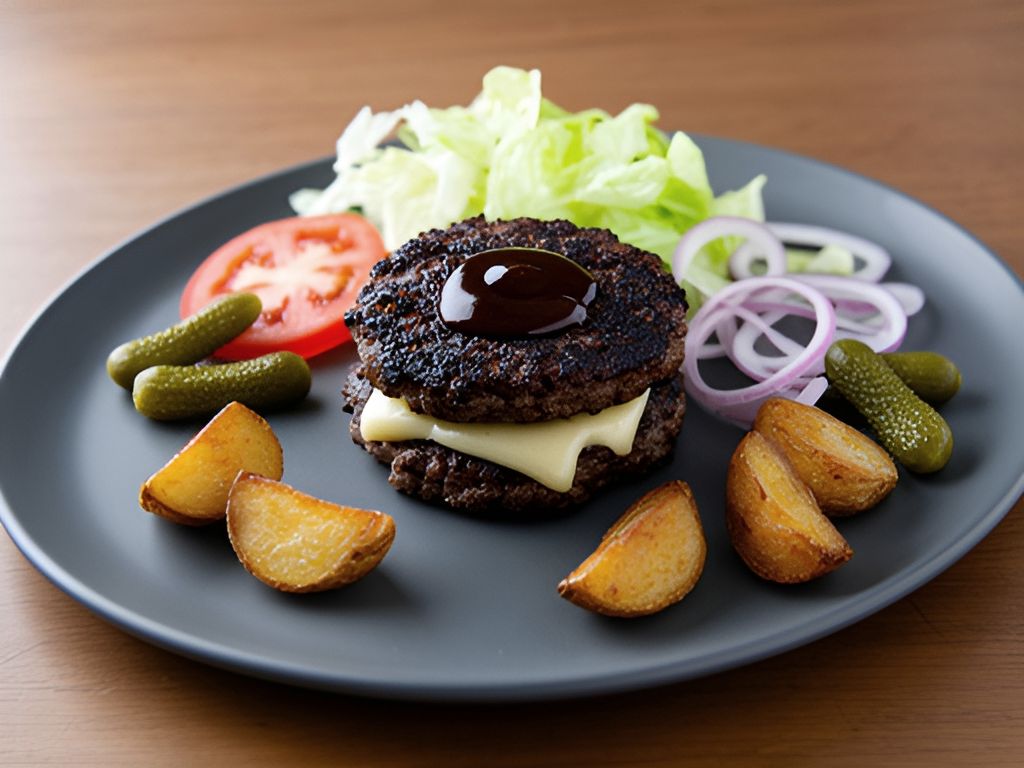
Double-patty stack in the middle of a warm plate. Spoon sauce over the top and a second pool at the edge for dipping, about 60g per person in total. Lettuce, tomato, onion and gherkins alongside in distinct piles, potatoes on the plate rather than in a separate bowl. Shave a little Sbrinz over the stack if you want it.
2mTip: Everyone composes their own forkful, which is exactly why each pile had to be seasoned and prepared on its own.
Allergens
Storage & Shelf Life
Refrigerated
Temperature: 0-4°C
Shelf life: 1 day
Freeze: Not recommended
Don't. A 5mm smashed patty goes from perfect to dry in about four minutes and does not survive reheating, least of all on the oven's regeneration function. Cook to order and serve each round as it comes off the pan.
Plating
Double stack in the centre with the cheese melted between the patties, sauce over the top and a second pool at the edge. Lettuce, tomato, onion and gherkins in separate piles, not scattered. Crisp potatoes on the same plate. The patty edges should look dark and lacy, not grey.
Garnish: Sliced gherkins; optional raw Sbrinz shavings
Serve in: Warm flat plates
Temperature: Hot — straight from the pan, no rest
Techniques Used
The Story Behind This Dish
“A diner cheeseburger with the bun taken away, and the optimisation turned on one realisation: the bun was doing four jobs, and none of them was holding the burger. It supplied crisp texture against a soft patty, a toasted and faintly sweet register, something to absorb rendered fat and sauce, and neutral bulk that paced the richness. A first plated version removed the bun and reassigned nothing, which left a plate where everything was soft or wet. Here each job lands somewhere: the lacy smash crust and a crisp potato take the texture, the crust and onion fried into the patty take the caramelised register, the potato soaks up fat, and a sharper, longer-rested sauce with more pickle carries the acid. The result is more authentically American than the first version, with one deliberate Swiss departure: Raclette du Valais AOP in place of a processed slice, because it melts nearly as well and tastes considerably better.”
Wine pairing: A cold lager or pilsner is the natural partner; for wine, a juicy, lightly chilled red such as Beaujolais or Zweigelt.
Disclaimer: The information provided in this recipe, including preparation methods, storage guidelines, and shelf-life recommendations, is for general guidance only. We accept no responsibility for any foodborne illness or adverse effects resulting from the preparation, handling, storage, or consumption of food made using this recipe. Always follow safe food handling practices and consult official food safety guidelines.
Comments are not configured yet.