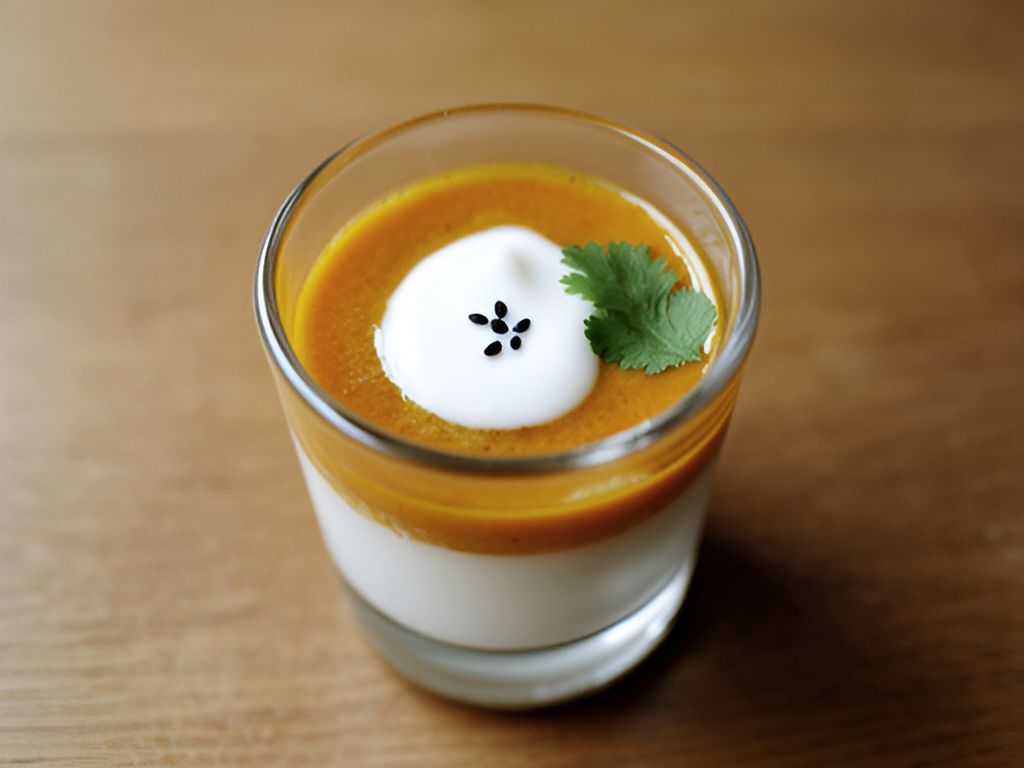
Coconut, Pumpkin and Garam Masala Shot
Roasted pumpkin, spices bloomed in ghee, coconut milk that never boils and lime added last: a hot two-sip amuse-bouche after the one at Indian Accent
Yield: 750 ml
Portion: ~40ml per shot
Prep: 20m
Cook: 1h 10m
Total: 1h 30m
Ingredients
Roast pumpkin (the day before)
- 1 kg pumpkin, Hokkaido or butternut, trimmed weight, from about 1.3kg whole. Hokkaido unpeeled, butternut peeled; seeds and fibres scooped out, cut into 3cm wedges
- 2 tbsp neutral oil, HOLL rapeseed oil or sunflower, not olive oil
- 1 tsp fine salt, for roasting
Soup
- 40 g ghee, or Bratbutter
- 1 large onion, finely diced
- 25 g fresh ginger, skin scraped off with a spoon, finely minced
- 3 cloves garlic, minced
- 2½ tsp garam masala
- 1 tsp ground cumin
- ⅔ tsp ground turmeric
- 2¼ tsp chili powder, 3 parts sweet paprika (Paprika edelsüss) to 1 part cayenne, mixed in advance. Kashmiri chili powder (Deggi Mirch) at the same quantity if you can find it
- 375 ml vegetable stock, made up in a jug first. If it is a powder, use about two thirds of the packet strength
- 315 ml full-fat coconut milk, from a tin with no added emulsifiers (Aroy-D tin, not the carton); do not shake it
To finish
- 2 tsp fine salt, added after blending, a quarter teaspoon at a time; you may need less with powdered bouillon
- 1 lime, juiced, added off the heat at the very end
- 1 tsp honey, only if the roasted pumpkin tasted flat rather than sweet(optional)
- coconut cream or nigella seeds, one garnish only: a single drop of coconut cream, or three or four nigella seeds per shot, to garnish(optional)
Method
Roast the pumpkin
- 1
Heat the oven to 200°C. Toss the 1 kg pumpkin wedges with the 2 tbsp neutral oil and 1 tsp fine salt, spread them in a single layer with space between them and roast for 35 to 40 minutes, until the edges are properly caramelised and dark in places.
40m200°Croasting trayRoast, never boil. The browned sugars and Maillard compounds on the cut faces are where the depth of this soup comes from; a boiled-pumpkin version tastes thin and vegetal whatever you add to it. Crowded wedges steam instead of browning, so use two trays if one is full.
Tip: Hokkaido skin softens completely in the oven and disappears in the blender, so there is no need to peel it. Butternut skin stays tough and has to come off.
- 2
Taste a piece of the roasted pumpkin, then let it cool. If you are not making the soup straight away, scrape it into a wide shallow container and refrigerate it within the hour.
5mRoasted vegetables should not sit out overnight in a cooling oven. Bacillus cereus spores survive roasting and germinate as food cools slowly, and a shallow container chills fast.
Tip: If the pumpkin tastes sweet and concentrated, the soup needs no honey. If it tastes watery or flat, that is when the teaspoon of honey earns its place in step 9.
Build the soup
- 3
Melt the 40 g ghee in a medium pan over medium-low heat and sweat 1 diced onion for 8 to 10 minutes, until soft, translucent and collapsed, with no colour at all.
10mmedium-lowNo browning here, unlike a curry base. Browned onion brings a caramel sweetness that fights the pumpkin, which is already sweet.
- 4
Add the 25 g ginger and 3 cloves garlic and cook for 1 minute, until the raw smell is gone.
1m - 5
Drop the heat to low first. Add the 2½ tsp garam masala, 1 tsp ground cumin, ⅔ tsp turmeric and 2¼ tsp chili mix and stir constantly for 30 seconds, until the spices darken a shade and smell toasted.
1mlowThirty seconds, no longer, or the ground spices scorch and turn bitter, and burnt garam masala ruins the whole pot. If the pan looks dry, add another teaspoon of ghee before the spices go in: they need fat to bloom. All the chili and cumin go in here. Stirred into the finished soup instead, they taste raw and dusty.
Blooming Dry Spices in FatTip: The chili quantity looks high for a soup and it is deliberate. Pumpkin, coconut milk and onion are all sweet, and nothing acidic enters the pot until the lime at the end, so the soup swallows heat. At 40ml in a glass the spice has to register in the first sip.
- 6
Add the roasted pumpkin (straight from the fridge is fine), the 375 ml stock and the 315 ml coconut milk. Break the pumpkin up with the spoon as it warms, bring it to a bare simmer and hold it there for 10 minutes.
15mbare simmerNever let it boil. An additive-free coconut milk emulsion breaks at a rolling boil, the fat separates out with grainy solids underneath, and it does not come back. The surface should barely move.
Managing Coconut Milk Emulsions in SaucesTip: Do not shake the tin. If the thick cream has separated to the top, that is the sign of a tin without stabilisers, which tastes better. Stir it together in the pan.
Blend, sieve and season
- 7
Let the soup drop below about 70°C, 5 to 10 minutes off the heat. Into the Thermomix, no higher than the maximum-fill mark, measuring cup in the lid with a folded cloth over it. Ramp from speed 1 to 10 over 60 seconds, then hold at 10 for 45 seconds.
10mThermomixHot liquid at high speed builds pressure and can blow the lid. Ramping rather than jumping straight to 10 stops it cavitating and spinning without catching the purée.
- 8
Pass the soup through a fine sieve, pressing with a ladle, and discard what stays behind.
5mfine sieveTip: At 40ml in a glass, texture is most of the experience. The Thermomix gets it close; the sieve catches the last ginger fibre and flecks of pumpkin skin, and it is the difference between a purée and something that feels engineered.
- 9
Now season. Add the 2 tsp fine salt a quarter teaspoon at a time, tasting as you go, and stop early if the stock was a salty bouillon powder. Add 1 tsp honey only if the soup tastes flat rather than sweet.
3mSalt goes in after blending, never before, because bouillon powders are salt-forward and you cannot take salt out. Consistency check: it should coat the inside of a glass lightly and be drinkable in two sips. Too thick, thin it with stock, not water. Too thin, reduce it gently before it cools.
Tip: The 2 tsp is what this batch actually needed at the dinner it was developed for, with a two-thirds-strength powdered stock.
- 10
Cool it quickly in a wide shallow dish and refrigerate. The lime does not go in yet.
5mTip: Up to this point everything can be done a day ahead.
Warm and serve
- 11
To serve, warm the soup gently over low heat, whisking, until it steams, around 60 to 65°C. It must not simmer. Off the heat, stir in the juice of 1 lime, then taste and correct the salt once more.
8mlowReheating is where most coconut soups split, so the care has to extend to the reheat. The lime goes in last and off the heat for two reasons: its brightness volatilises if it cooks, and acid lowers the pH towards the point where the coconut proteins let go.
Managing Coconut Milk Emulsions in Sauces - 12
Warm the shot glasses with hot water, pour it out and dry them. Fill each to about 40ml from a jug with a proper lip or a squeeze bottle, leaving a centimetre of clear glass, wipe every rim with a damp cloth, and add one garnish at most. Serve straight away with the mini blue cheese naan alongside.
5mA 40ml pour goes lukewarm within two minutes in a cold glass, and thin glass taking hot liquid from cold can crack. The whole point of this course is that it arrives hot.
Tip: The mini blue cheese naan is the optional final phase of the garlic naan recipe, made from the same dough. Brush them with plain ghee, not garlic ghee, which fights the blue cheese.
Allergens
Dietary
Storage & Shelf Life
Refrigerated
Temperature: 0-4°C
Shelf life: 3 days
Freeze: Yes
Warm gently over low heat, whisking, until steaming; never simmer or boil, and never use the oven's regeneration function, whose sustained heat is exactly what breaks a coconut emulsion. Add the lime only after warming, off the heat. If it does split, a stick blender off the heat usually brings it back.
Plating
50ml shot glasses filled to about 40ml, with a centimetre of clear glass at the top and the rims wiped clean. Either all the glasses down the middle of a tray or board with the mini naan around them, passed at the table, or one glass per small plate with a folded napkin under it so it does not slide and the naan resting alongside. If a filled glass is too hot to hold comfortably, it goes on a saucer.
Garnish: One thing only: a single drop of coconut cream in the centre, or three or four nigella seeds, or one small coriander leaf. No dusting of spice, which goes muddy on the surface.
Serve in: Warmed 50ml shot glasses or espresso cups
Temperature: Hot but drinkable, around 60-65°C; serve immediately
The Story Behind This Dish
“Indian Accent in New York opens its meal with a hot pumpkin, coconut and garam masala soup shot served beside a miniature blue cheese naan, and the reason it lands is contrast: the soup is sweet, warm-spiced and creamy, the cheese sharp and salty against it. This is that amuse reverse-engineered for a four-course Indian dinner for seven in Basel, built around butter chicken, where it had to be made entirely in advance and warmed to serve. The first written version used a quarter teaspoon of chili and no cumin, and at the end of service it tasted flat and one-dimensionally sweet. The corrections made that evening are built in here: about two teaspoons more chili (a sweet paprika and cayenne mix, since there was no Kashmiri chili to be had), a teaspoon of ground cumin, both blooming in the ghee with the other spices, and salt landing at two teaspoons for the batch.”
Wine pairing: A dry Petite Arvine from Valais: high acidity and a saline edge that holds up against both the sweetness and the spice. Heida or Païen from Upper Valais has more body if you want something to sit under the blue cheese naan.
Disclaimer: The information provided in this recipe, including preparation methods, storage guidelines, and shelf-life recommendations, is for general guidance only. We accept no responsibility for any foodborne illness or adverse effects resulting from the preparation, handling, storage, or consumption of food made using this recipe. Always follow safe food handling practices and consult official food safety guidelines.
Comments are not configured yet.