Tosta de Atum com Coentros e Alho
Algarve-style tuna toast: a rebalanced olive-oil binder, tuna warmed in its own oil, young Gruyère and a toasted panko crust under the grill
Yield: 2 portions
Portion: 2 open tostas (or 8 quartered petisco pieces for the whole batch)
Prep: 20m
Cook: 5m
Total: 25m
Ingredients
Tuna and binder
- 160 g tuna in olive oil (drained weight), Bom Petisco, Ramirez, La Brújula or Ortiz; ventresca (belly) if you can. Drain over a bowl and keep every drop of the oil
- 1½ tbsp mayonnaise, about 22g; homemade with olive oil if you have three minutes and a stick blender
- 1 tsp Dijon mustard
- ½ lemon, zested first (½ tsp zest), then 1 tsp juice squeezed; keep the rest of the half for the finish
- ¼ tsp black pepper, freshly ground
- 1 tsp peppery Portuguese extra-virgin olive oil, Trás-os-Montes DOP or Moura DOP; green and grassy
- fine sea salt, only after tasting; often none at all, to taste
Aromatics
- 80 g red onion, 1 small, finely chopped
- 1 clove garlic, grated on a microplane
- ½ tsp olive oil, to hold the grated garlic
- 3 tbsp fresh coriander leaves, picked, washed and dried, kept whole until the last moment; half goes in the mix, half on top after grilling
Bread and topping
- 4 slices rustic bread, thick; pão alentejano, sourdough or a good country loaf
- 20 g butter, softened, about 5g per slice
- 55 g young Gruyère AOP (réserve), grated coarse from the block, not pre-shredded
- 2 tbsp panko breadcrumbs, toasted dry until light gold
- ½ tsp dried oregano
To finish
- piri-piri sauce, a few drops per tosta, to taste(optional)
Method
Mise en place
- 1
Pick 3 tbsp coriander leaves, wash and pat them completely dry. Leave them whole for now.
3mTip: Chopped coriander loses its aromatic top notes within minutes. It gets cut in two separate moments later, each one right before it is used.
- 2
Grate the 1 clove garlic on a microplane into a small dish and stir in the ½ tsp olive oil.
1mTip: Grating rather than mincing dissolves the garlic into the binder with no raw chunks. The film of oil slows oxidation while everything else gets ready.
- 3
Finely chop the 80 g red onion, cover it with cold water and leave it 5 minutes. Drain and pat dry on kitchen paper.
5mThe soak rinses away part of the water-soluble sulphur compounds released when the onion is cut. Raw onion and raw garlic together in an unsoaked mix is harsh; soaked, the onion reads sweet and crunchy. Dry it properly, or the water dilutes the binder.
- 4
Zest the ½ lemon (about ½ tsp zest), then squeeze 1 tsp juice from it. Keep what is left of the half for the finish.
1mTip: Zest first, always. The juice brings acid; the zest brings limonene and the other aromatic oils, which survive the grill far better than the juice does.
- 5
Grate the 55 g Gruyère on the coarse side of a box grater and leave it out at room temperature.
2mFrom the block only. Pre-shredded cheese carries cellulose anti-caking agents that stop the strands bonding into one melted layer. Cold cheese under a hot grill also breaks: the casein network tightens and squeezes out its fat.
Grill Finishing for Cheese-Topped Dishes - 6
Toast the 2 tbsp panko in a dry pan over medium heat for about 90 seconds, shaking, until light gold. Tip onto a plate straight away.
2mmediumTip: Light gold, not brown. It goes back under the grill and colours further there.
The binder
- 7
Tip the 160 g tuna into a sieve set over a small bowl and let it drain for 2 minutes without pressing. Keep the oil: you need 1 tbsp for the binder and 1 tsp for warming the fish.
2mThe packing oil is where the tin's flavour has gone during canning. Pouring it down the sink and replacing it with mayonnaise is the single most common mistake with tinned fish.
Tinned-Fish Fat-Emulsion Binder - 8
In a medium bowl, whisk the 1½ tbsp mayonnaise with the 1 tsp Dijon, 1 tsp lemon juice, ½ tsp zest and ¼ tsp black pepper. Add 1 tbsp of the reserved tuna oil in a thin stream while whisking, then the 1 tsp extra-virgin olive oil the same way. Do not salt.
2mTwo things here. The acid goes into the binder before the fish so the fat buffers it and spreads it evenly; lemon juice dropped straight onto cold tuna firms the flakes in tight white spots. And the oils go in as a stream: the yolk lecithin in the mayonnaise can only take on extra fat gradually, and pouring it in at once breaks the emulsion into an oily, weeping mix. You want a glossy binder, a little looser than mayonnaise.
Tinned-Fish Fat-Emulsion BinderTip: Mayonnaise does the emulsifying, the oils do the flavouring. The original two spoons of mayonnaise tasted of mayonnaise; this tastes of tuna and olive oil.
- 9
Put the drained tuna in a small non-stick pan with 1 tsp of its reserved oil. Set it over the lowest possible heat for 2 minutes, stirring once. Take it off the moment it is just warm to the touch.
2mlowWarm, not hot. Gentle warming in its own oil relaxes the proteins that canning compressed and lets the fish take up the binder evenly. Hot tuna starts to cook again and goes dry. If you skip one step in this recipe, do not skip this one.
Tinned-Fish Fat-Emulsion Binder - 10
Tip the warm tuna into the binder and flake it with a fork, folding from underneath. Add the drained onion and the garlic with its oil. Chop half the coriander now, add it and fold through. Taste, and only then add salt if it needs any.
3mFold, do not stir. Stop while you can still see distinct flakes; you want flakes in a glossy dressing, not a paste. Use within 15 minutes: past about 30 minutes the acid starts to tighten the fish and the aromatics go flat.
Tinned-Fish Fat-Emulsion BinderTip: With good tinned tuna and Gruyère on top, the mix usually needs no added salt at all. Both bring plenty.
Toast the bread in butter
- 11
Start preheating the grill at full heat with the rack about 10cm below the element. Butter one side of each slice of bread (4 slices) with the 20 g butter, about 5 g per slice. Lay them buttered side down in a wide pan over medium heat for 90 seconds until deep golden, flip and give the dry side 30 seconds. Move to a baking tray, browned side up.
3mmediumwide frying panThe butter is there for waterproofing more than flavour. The filling goes on the browned, buttered face, and that layer of fat stops moisture from the warm tuna migrating into the crumb under the grill. Dry toast buttered afterwards does not seal nearly as well.
Grill Finishing for Cheese-Topped Dishes
Assemble and grill
- 12
Spread the tuna mixture over the browned sides of all four slices, firmly and right to the edges. Sprinkle the ½ tsp oregano over them, then the grated Gruyère in an even, thin layer, then the toasted panko on top of the cheese.
2mKeep the cheese layer thin, around 14 g per slice here. Past about 5mm the surface browns before the cheese underneath has melted. Assemble just before grilling and never refrigerate the assembled tostas; the grill finishes, it does not heat through.
Grill Finishing for Cheese-Topped DishesTip: The panko is the third texture the café version lacks: crisp bread, soft filling, and a crunchy top. It is the single biggest change to how this eats.
- 13
Slide the tray under the preheated grill and stay there. At 60 seconds the cheese should glisten and bubble at the edges; turn the tray round if your grill has a hot back. At around 90 seconds darker patches appear on the panko and the cheese peaks. Pull at 120–150 seconds, when 50–70% of the surface is golden-brown with a few darker spots.
3mgrill, full heatgrill (broiler)baking trayWatch colour, not the clock. A small, powerful grill can be done in 90 seconds. Above 3 minutes the panko burns before the cheese browns properly and bitter compounds start to form. Gruyère has almost no lactose left, and lactose is a reducing sugar that helps cheese brown, so it colours more slowly than a young melting cheese. Do not chase dark colour past the 3-minute mark.
Grill Finishing for Cheese-Topped Dishes - 14
Rest the tostas 30 seconds. Chop the remaining coriander, scatter it over the top, squeeze over the rest of the lemon half and add a few drops of piri-piri if you like.
1mCoriander loses its aroma within seconds under radiant heat, so this half only ever goes on after the grill. The mix-coriander gives depth, the top-coriander gives the smell as the plate arrives.
Grill Finishing for Cheese-Topped Dishes - 15
Cut and serve straight away: on the diagonal with a small green salad for lunch, or each tosta into four squares for a petisco board with olives and pickled onion.
1mTip: The 30-second rest lets the molten cheese set to a soft solid so it stays on the bread when you cut.
Allergens
Storage & Shelf Life
Refrigerated
Temperature: 0-4°C
Shelf life: 1 day
Freeze: Not recommended
A grilled tosta is for eating immediately. A leftover one can be re-crisped bread-side down in a dry pan over medium heat for 2 minutes, then 60 seconds under the grill. Not the microwave and not the oven's regeneration function: steam is exactly what turns the bread soggy.
Plating
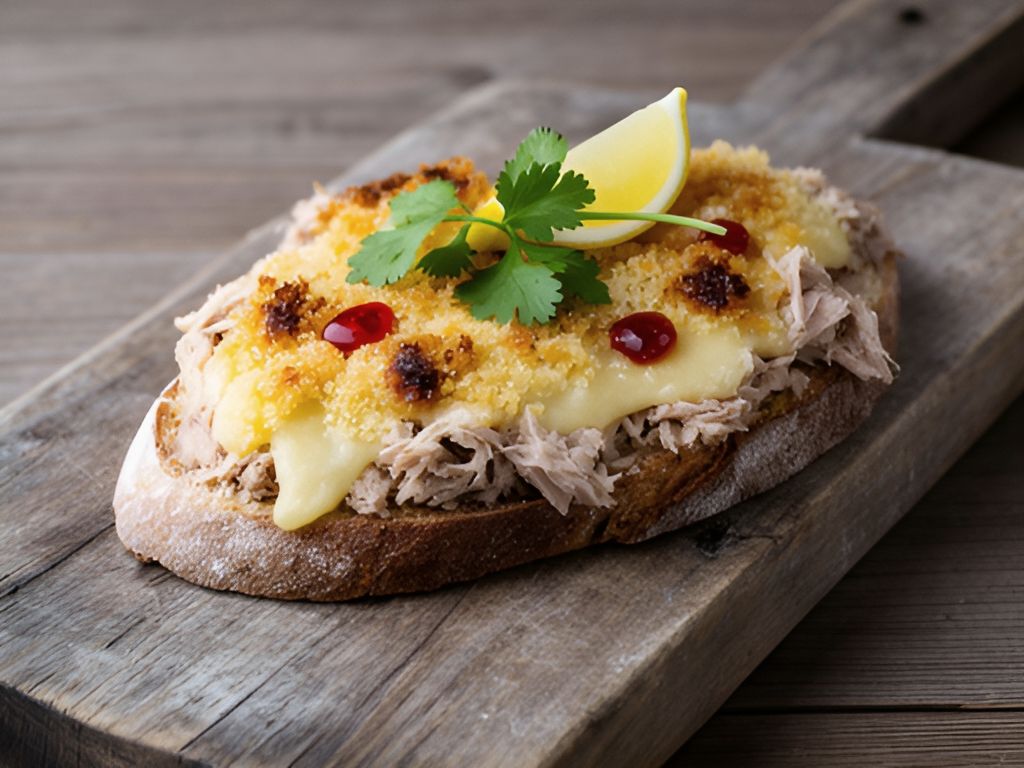
Open-faced on a board or a warm plate, cut on the diagonal. The surface should be patchy golden-brown with a few darker spots, the panko crisp, and the green of the fresh coriander bright against it. For a petisco spread, quarter each tosta and arrange the squares on a board with olives and pickled onion.
Garnish: The reserved half of the coriander, a squeeze of lemon and a few drops of piri-piri
Serve in: Wooden board or warm flat plate
Temperature: Hot, within a minute or two of leaving the grill
The Story Behind This Dish
“The tosta de atum is a counter staple of every Portuguese café: toasted bread, a tuna and onion filling, cheese melted on top under the grill. It began here as the standard Lisbon version, then lost its parsley to coriander and gained garlic, and coentros e alho is the foundational aromatic pair of the Alentejo and the Algarve, the base of açorda and migas. That moves the dish south. The fine-tune then went after the two things that decide whether this is a café snack or a petisco worth making: the texture of the filling and the contrast in the finished bite. The binder is rebuilt so that mayonnaise does the emulsifying and the tin's own oil and a fresh, peppery olive oil do the flavouring. The tuna is warmed in its oil before it meets the binder. And a toasted panko layer goes on top of the cheese, giving the third texture that crisp bread and soft filling alone never have. The cheese is a young Gruyère AOP: Portuguese café cooks use whatever good melting cheese is local, and Gruyère in Basel is what flamengo is in Cascais.”
Wine pairing: Vinho Verde, a chilled fino sherry, or a dry Riesling.
Disclaimer: The information provided in this recipe, including preparation methods, storage guidelines, and shelf-life recommendations, is for general guidance only. We accept no responsibility for any foodborne illness or adverse effects resulting from the preparation, handling, storage, or consumption of food made using this recipe. Always follow safe food handling practices and consult official food safety guidelines.
Comments are not configured yet.