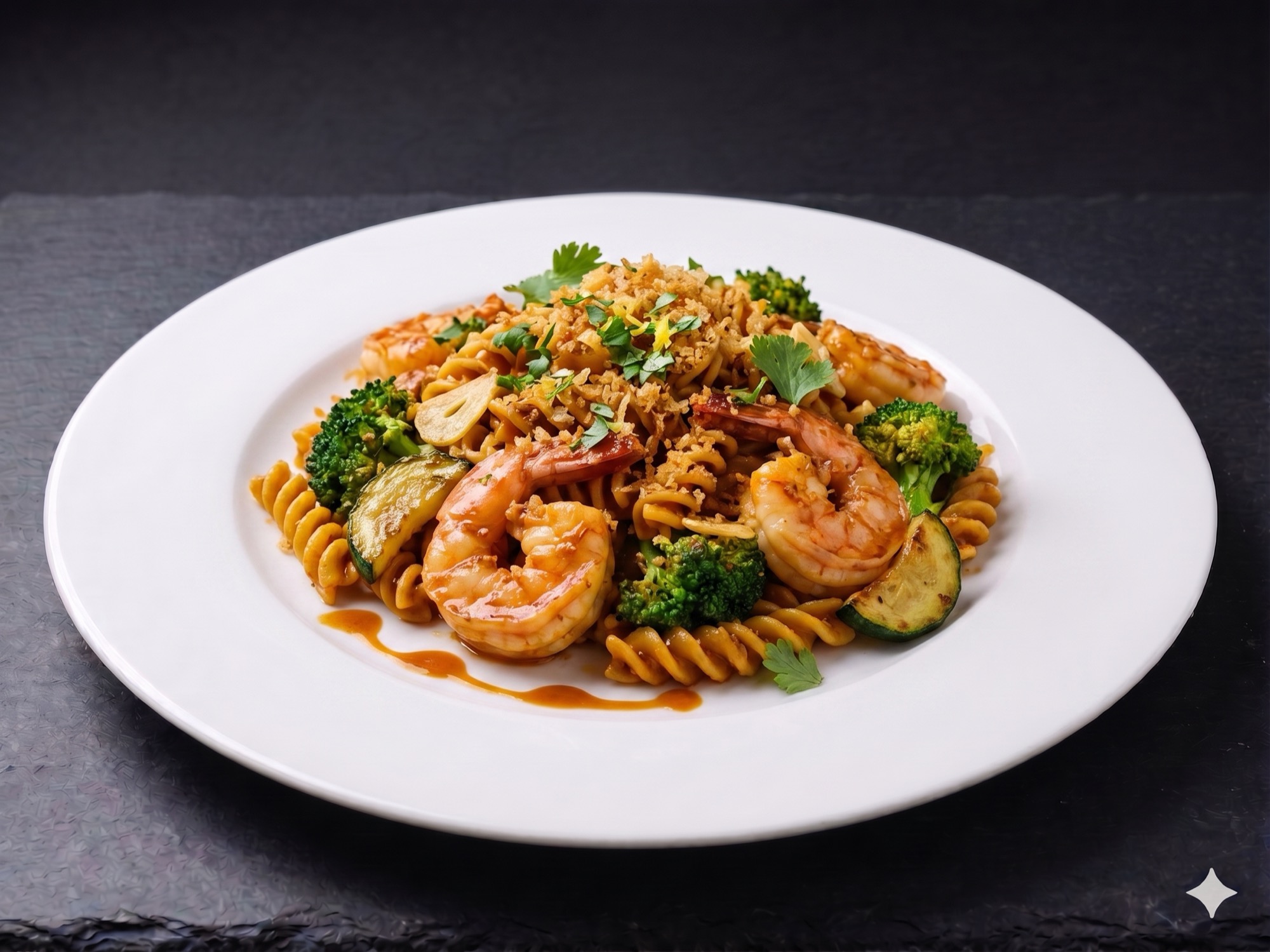
Fusilli with Shrimp, Broccoli & Zucchini
Curry-garlic bloom, shrimp-shell reduction, and pre-cooked shrimp folded in off the heat
Yield: 4 portions
Portion: ~450g
Prep: 25m
Cook: 35m
0Total: 1h
Ingredients
Shrimp-shell reduction (start first)
- 400 g shells and heads from the shrimp below, squeeze each head over the bowl as you pull it off — the brown-orange head paste is the point
- 20 ml HOLL rapeseed oil, or another neutral high-smoke-point oil
- 15 g tomato paste
- 100 ml dry white wine or dry vermouth
- 400 ml cold water
- 1 orange zest, a strip — classical with shellfish and sits better against curry powder than lemon(optional)
- 1 tsp fennel seeds, bridges the seafood and the spice(optional)
Pasta, shrimp and vegetables
- 800 g whole cooked head-on shrimp, peeled cold — yields ~400g meat and ~400g shells and heads
- 400 g fusilli
- 350 g broccoli, florets, plus the stalk peeled and diced 8mm
- 300 g zucchini, two medium, cut into 8mm half-moons
- 4 g fine salt, for salting and draining the zucchini
- 20 ml olive oil, for searing the zucchini
Curry-garlic bloom
- 60 ml olive oil
- 5 garlic, thinly sliced
- 8 g Madras-style curry powder, open less than four months — older powder cannot be rescued by blooming
- 0.5 g chilli flakes
To finish
- 25 g cold butter, cubed
- 1 lemon, all the zest, plus 15ml of the juice
- 20 g coriander, chopped — or flat parsley, or half coriander and half mint
- 30 g panko or coarse breadcrumbs, toasted in olive oil — the only crunch in the dish
- to taste salt, only after the shrimp are in — shop-bought cooked crevettes are often brined
Lactose-free alternative
- 30 ml lactose-free double cream, instead of the butter — more stable, but take the lemon juice up to 20ml(optional)
Method
Shrimp-shell reduction (start first)
- 1
Peel the shrimp cold, before anything else. Heads and shells into one bowl, meat into another and back into the fridge covered. Squeeze each head gently over the bowl as you pull it off.
10mThe brown-orange paste inside the head carries more glutamate and more sweet prawn character than everything else combined. Losing it is the single most common reason this reduction comes out thin.
Shellfish Shell Reduction - 2
Pat the shells dry on kitchen paper. Heat the rapeseed oil in a wide saucepan over high heat until it just shimmers, add all the shells and heads and press them flat with a wooden spoon. Leave them 2 minutes, stir and press again. 5–6 minutes total.
6mhighwide saucepanThey came out of a boiling pot and they are wet. Wet shells steam instead of browning, and browning is most of the point. Stop when the pan smells of toasted crustacean rather than boiled shrimp and the shells have gone deep brick-orange.
Shellfish Shell Reduction - 3
Add the tomato paste and fry 60 seconds, stirring, until it darkens a shade and loses its tinned smell. Deglaze with the wine or vermouth, scraping hard, and reduce almost to nothing. Add the orange zest and fennel seeds now if using.
3m - 4
Add the cold water, bring to a bare simmer and hold it there for 20–25 minutes only.
25mbare simmerDo not boil and do not go longer. Shrimp shells are thin and give up everything inside 25 minutes. Past that you pull chalky calcium and chitin notes into the liquid, which is why long-simmered shell stocks taste dusty.
Shellfish Shell Reduction - 5
Strain through a fine sieve into a smaller pan, pressing the solids hard with a ladle until they stop giving — about 250ml. Reduce over medium heat to 150ml.
10mMeasure it, don't judge by eye. At 150ml it should coat the back of a spoon lightly and taste aggressively, almost unpleasantly, of concentrated prawn. That intensity is correct — it gets diluted fivefold. Do not salt it.
Shellfish Shell ReductionTip: Keeps 3 days refrigerated and freezes for 3 months. Doubling or tripling the batch costs no extra effort and turns a 60-minute dish into a 30-minute one.
Mise en place
- 6
Toss the zucchini half-moons with the 4g fine salt in a colander. Leave 15 minutes, then squeeze gently in a clean towel.
15mZucchini is about 94% water. This pulls out perhaps 30ml of it, and it is the difference between zucchini that browns and zucchini that boils itself grey and then dilutes your sauce.
- 7
Broccoli florets off, stalk peeled and diced 8mm, kept separate. Garlic sliced thin. Curry powder and chilli weighed into one small dish. Lemon zested, juice squeezed. Herbs chopped last, just before serving.
10mTip: The last twelve minutes of this dish cannot be paused. Everything needs to be within arm's reach before the fusilli goes in.
Sear the zucchini
- 8
Heat the 20ml olive oil in your widest pan over high heat and sear the zucchini in a single layer, undisturbed, 2 minutes, then toss and give it another 2. Tip it onto a plate. Do not wipe the pan.
4mhighTip: You want distinct golden faces and a bit of resistance in the middle — it softens further when it goes back in. This can be done up to two hours ahead and held at room temperature.
Pasta and broccoli
- 9
Salt a large pot of water at 10g per litre and bring to the boil. Drop in the fusilli and set your timer 2 minutes short of the packet's al dente time. In the last 3 minutes, add the broccoli florets and diced stalk directly to the pasta water.
10mSalt lighter than usual — the reduction and the shrimp both bring salt. Reserve 250ml of the pasta-and-broccoli water in a jug before you drain anything.
Tip: The broccoli releases its own sugar and sulphur into the water, and that water becomes your sauce. The stalk is sweeter than the florets and most people throw it away.
The curry-garlic bloom
- 10
In the same wide pan over low heat, add the 60ml olive oil and the sliced garlic, starting them in oil that is barely warm. It should take 3–4 minutes to reach pale gold.
4mlowTip: Cold-starting garlic gives a slow, even climb through the band where the alliin-derived compounds sweeten instead of turning acrid.
- 11
The moment the garlic edges colour, take the pan off the heat entirely. Count five seconds, then add the curry powder and chilli flakes and stir constantly for 40–50 seconds.
1moff the heatThis is the step with the least margin. The residual heat is around 140–150°C, exactly where ground spices release their fat-soluble volatiles. Above about 180°C the turmeric and fenugreek scorch and turn permanently bitter, and there is no recovering from it. You are listening for the smell to shift from dusty to nutty and sweet. If you see a wisp of smoke, throw it out and bloom again — a burnt bloom defines the whole dish.
Blooming Dry Spices in Fat - 12
Immediately kill the residual heat by pouring in the 150ml shell reduction and 150ml of the pasta water. Return to medium heat and let it bubble for a minute.
1mmediumTip: The sauce will look thin and slightly broken at this stage. That is expected.
Emulsify
- 13
Lift the pasta and broccoli straight out of the water with a spider into the sauce, dragging some water with them. Crush about a quarter of the broccoli florets against the side of the pan with the back of a spoon.
2mThe crushed broccoli is what replaces the ground nuts and cheese of a pesto. Broccoli purée is a genuine thickener and it is what makes the sauce sit inside the fusilli spirals instead of running out of them.
Mantecatura (Pasta Sauce Emulsification) - 14
Raise the heat to medium-high and toss hard for 2 minutes, adding pasta water in 50ml splashes as it tightens. Return the zucchini for the last 30 seconds.
2mmedium-highYou are finishing the pasta in the sauce and the starch coming off it is the emulsifier. Gentle stirring does not emulsify anything — this is mechanical work.
Mantecatura (Pasta Sauce Emulsification) - 15
Pull the pan off the heat. Add the cold cubed butter and toss vigorously until it disappears. Add the lemon zest and 15ml of juice. Taste.
1moff the heatThe emulsion sets here and it must happen off direct heat, or the butter breaks and you get an oil slick.
Tip: The acid is not optional. Curry powder without acid reads flat and muddy, and the umami you built in the reduction only becomes legible once something bright cuts across it. If it still tastes heavy, add another 5ml of juice rather than more salt.
Fold in the shrimp and serve
- 16
Fold in the 400g cold cooked shrimp and the chopped coriander. Toss for 45 seconds off the heat, no longer.
1moff the heatThe shrimp are already cooked — nothing you do in the pan improves them. Past 63°C the protein fibres contract and squeeze out moisture, and there is no way back. The residual heat of 400g of pasta is more than enough. If the pan has cooled too much, 20 seconds on the lowest flame, but the failure mode is always overcooking, never under.
Warming Pre-Cooked Shellfish Without Toughening It - 17
Check the salt one final time, now that the shrimp have contributed theirs. Serve immediately, with the toasted breadcrumbs scattered over the top.
1mTip: Everything else in this dish is soft. The breadcrumbs are the only crunch and their absence is noticeable.
Allergens
Storage & Shelf Life
Refrigerated
Temperature: 0-4°C
Shelf life: 1 day
Freeze: Not recommended
This is one to eat immediately. If you must reheat, do it in a pan with a splash of water over low heat and pick the shrimp out first, returning them at the very end off the heat. Never use the oven's regeneration function — sustained gentle heat is exactly the condition that turns cooked shrimp to rubber, and the butter emulsion breaks as it sits.
Plating
Warm shallow bowls. The sauce should cling to the spirals with a satin sheen and there should be no liquid pooling at the base of the bowl after thirty seconds. Shrimp visible on top rather than buried.
Garnish: Toasted breadcrumbs and a few coriander leaves
Serve in: Warm shallow bowls
Temperature: Hot — serve immediately, the emulsion is stable for a few minutes only
Techniques Used
The Story Behind This Dish
“A hybrid with no single home: the form is Italian, the spicing is Anglo-Indian by way of commercial curry powder, and the shell reduction is French bisque practice. It started as a pesto pasta, and removing the pesto was the right call because basil and curry fight each other — but pesto was doing five jobs at once, and one of them was body. The ground nuts and cheese were what made the sauce cling inside the fusilli spirals. Three things replace it here: the reduced shell stock, a quarter of the broccoli mashed into the sauce, and a proper starch-and-fat emulsion at the end. The second idea to hold onto is that the shrimp are already cooked. Nothing in the pan improves them, so the dish is built entirely without them, brought to a finished emulsified state, and only then are they folded through off the heat.”
Wine pairing: A dry Alsace Riesling or a Grüner Veltliner — aromatic enough for the curry, acidic enough for the shrimp. Avoid oak.
Disclaimer: The information provided in this recipe, including preparation methods, storage guidelines, and shelf-life recommendations, is for general guidance only. We accept no responsibility for any foodborne illness or adverse effects resulting from the preparation, handling, storage, or consumption of food made using this recipe. Always follow safe food handling practices and consult official food safety guidelines.
Comments are not configured yet.