Migas de Pão
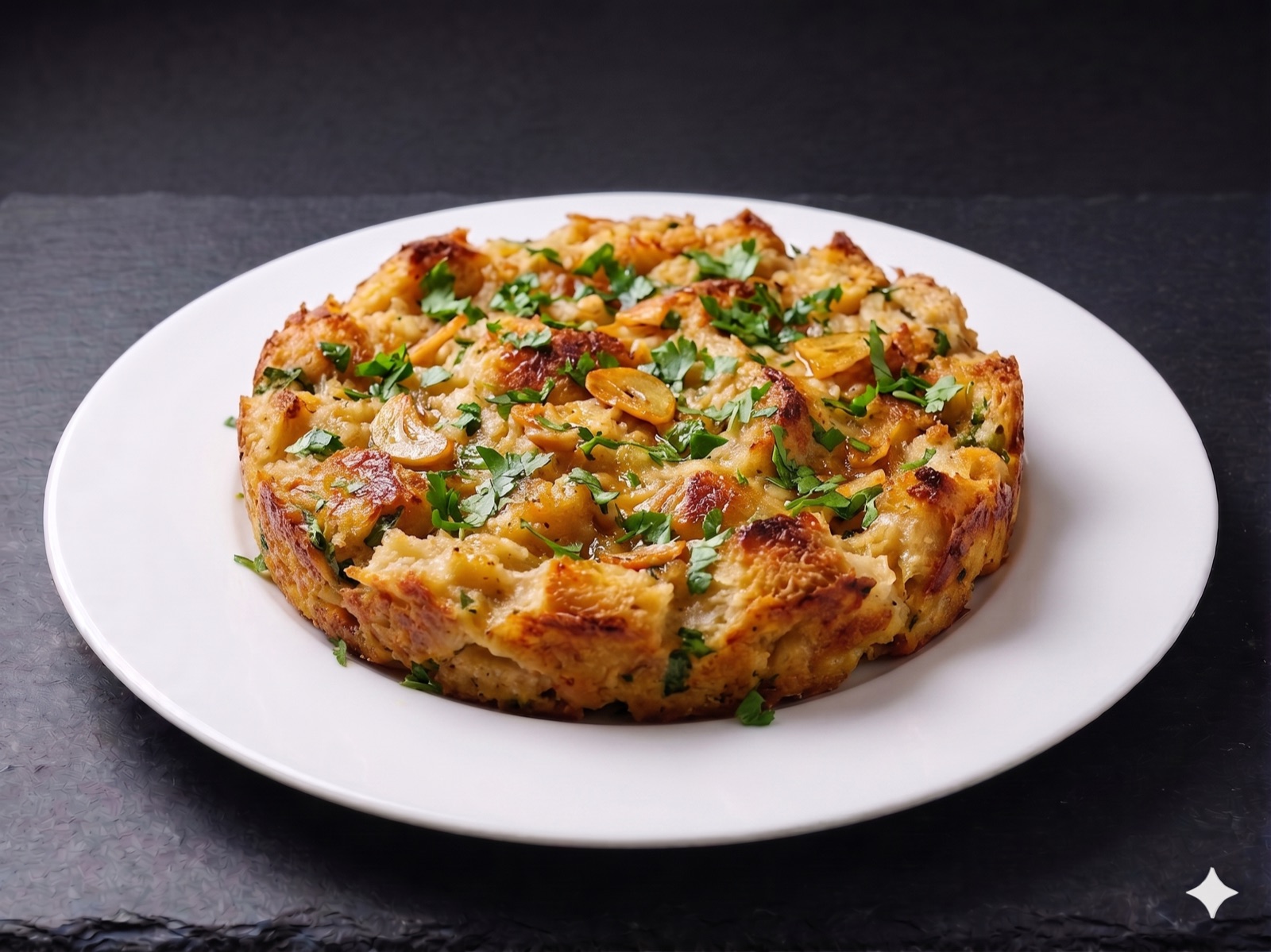
Bound Alentejo bread cake with garlic, olive oil and coriander — a side built to soak up the cebolada and tie to seared tuna
Yield: 4 portions
Portion: Side
Prep: 10m
Cook: 15m
Rest: 5m
Total: 30m
Ingredients
Migas
- 400 g day-old rustic country bread, crusts on, torn into rough 2–3 cm chunks; the staler the better
- 200 ml hot water or light fish stock, genuinely hot, not warm; hold back the last third for the pan
- 80 ml olive oil
- 4 garlic, sliced
- 20 g fresh coriander, chopped, split into two piles (one to cook in, one to finish raw)
- 0.5 tsp sweet paprika
- 0.5 tsp fine salt, plus more to re-check at the end
- to taste piri-piri, a pinch, optional(optional)
Method
Soak the bread
- 1
Tear the 400 g day-old bread into a wide bowl and pour over enough hot water or light fish stock (start with ~150 ml of your 200 ml) to dampen it through. Toss and leave it 5 minutes. You want it damp and yielding, not soup — hold back the rest of the liquid for the pan.
5mDay-old bread and hot liquid are the single biggest determinant of success: stale (retrograded) bread drinks liquid and softens without collapsing, and hot liquid re-gelatinises the starch into the glue that binds the cake. Cold water on fresh bread gives you mush — an açorda, not migas.
Binding Bread Migas (a Bread "Cake" from Stale Bread)
Bloom the garlic and paprika
- 2
While the bread soaks, warm the 80 ml olive oil in a wide, heavy pan over medium-low and add the 4 sliced garlic cloves. Take them only to pale gold and fragrant, 2–3 minutes.
3mmedium-lowPast gold the garlic turns acrid and you will taste it through the whole dish. Pull it early — it carries on cooking in the residual heat.
Garlic-Oil Infusion (Two-Stage Method) - 3
Drop the heat to low and stir in the ½ tsp sweet paprika for just 10–15 seconds, then move straight on to the bread.
1mlowBlooming Dry Spices in FatTip: Paprika scorches and turns bitter in a flash on direct high heat — bloom it briefly in the warm oil off the boil.
Build and crisp the migas
- 4
Add the dampened bread, half the chopped coriander and the ½ tsp salt. Fold and press with a wooden spoon over medium heat. It will look like a shaggy, broken mass at first — keep folding and pressing and over 8–12 minutes it draws together into a soft, cohesive paste. If it looks dry, add the reserved hot liquid a splash at a time; if it's gluey and slack, keep cooking to drive off moisture.
12mmediumBinding Bread Migas (a Bread "Cake" from Stale Bread)Tip: Don't cut the oil — fat is the binder and the carrier. Lean migas is dry migas.
- 5
Once it has come together, stop stirring and let it sit against the pan for a minute or two so the base catches and crisps, then fold the crust back in and press flat again. Repeat once or twice.
4mBuilding crust is the single thing that separates a memorable migas from a beige mound — pockets of toasted crust through a creamy interior. Crust only forms where bread meets hot metal, so keep the layer pressed and undisturbed while it browns.
Binding Bread Migas (a Bread "Cake" from Stale Bread)
Finish and serve
- 6
Off the heat, fold through the second half of the coriander raw, then taste for salt (the bread will have absorbed a surprising amount). If serving with seared tuna, splash a little water into the reserved tuna pan, scrape up the seared-on jus, and fold that through — it laces the side with the flavour of the fish and the cebolada so the plate reads as one dish.
1mTip: Cooked coriander goes muddy and grassy; raw coriander stirred in at the end keeps its lift.
- 7
Press into a rough cake in the pan, or shape into a loose log, and serve straight away alongside the tuna and onions. Migas stiffens and dries as it cools, so it is an à la minute side — serve it the moment it is done.
1m
Allergens
Dietary
Storage & Shelf Life
Refrigerated
Temperature: 0-4°C
Shelf life: 2 days
Freeze: Not recommended
Migas reheats poorly — the starch retrogrades again and it goes dense. If you must, add a splash of water and a little oil and warm gently and low. Don't microwave hard, or it turns to rubber.
Plating
Press into a rough cake or shape into a loose log and serve straight from the pan alongside the seared tuna and its jammy cebolada, the side soaking up the sauce.
Garnish: Raw coriander folded through; a thread of olive oil
Serve in: The pan, or a warm platter
Temperature: Hot — serve immediately
Techniques Used
The Story Behind This Dish
“This is the bread-and-garlic, coriander-finished, bound-cake migas — Alentejana at root (the cod version there is called gatas). The Algarve's own migas more typically uses sweet potato (migas de batata-doce). I've kept the bread version because it suits lean tuna and soaks up the onion sauce; it is a bound cake, not a porridge — if yours is sloppy, you've made an açorda.”
Disclaimer: The information provided in this recipe, including preparation methods, storage guidelines, and shelf-life recommendations, is for general guidance only. We accept no responsibility for any foodborne illness or adverse effects resulting from the preparation, handling, storage, or consumption of food made using this recipe. Always follow safe food handling practices and consult official food safety guidelines.
Comments are not configured yet.